



Update No. 20
September 2026
This edition focuses on real estate: what the portfolio has actually returned, how the live projects are set up, and a new way to hold the strategy. It covers Merito’s first exit and the capital that has come back to investors, why Riga’s new-build segment still has not repriced with the rest of the market, and Real Estate Feeder Fund I.
It has been two and a half years since Merito Partners closed its first real estate fund. In that time the strategy set out in Newsletter No. 18 has moved from thesis to distributions. Four funds have returned investor capital in full, each within 16 to 24 months of inception, the first profit has been paid out, and the portfolio now runs to more than 1,000 apartments across fourteen funds.
Kalēju 18/20 was the first fund and it is the first to return profit. Seventeen units in Riga’s Old Town, bought as a single lot for €2.9 million against a valuation of roughly €4.5 million if sold unit by unit. The work was everything in between: separate the units, fix them, design, renovate, furnish, operate, build a track record, sell. €1.0 million of profit has now been distributed to the nine investors in the fund: a realised 30% IRR and 1.8x on capital, against the 20–30% targeted at launch. The follow-up sale of the ground-floor units is expected to bring the IRR into the 35–40% range.
Three more funds have returned investor capital in full, each within 16 to 24 months of inception. The speed matters here as much as the multiple. Pasta 6 has returned the full €2.1 million raised in February 2024, with the exit itself still in progress. Ulmaņa gatve 2 has repaid its €2.5 million; that asset (40,000 m² of industrial space on a 6.5-hectare leasehold) is carried materially above acquisition cost and is now in strategic review, where we are weighing a hold against a sale. A fourth fund returned capital with a small positive return after the transaction was terminated by the seller (confidentiality obligations prevent us from naming it or going further). A fifth is contracted to return 100% of capital in Q4 2026, fourteen months after inception.
The portfolio as it stands
Fourteen real estate funds have been launched since December 2023. More than €28 million has been raised across them, over €11 million has been distributed back, and the projects in the portfolio carry a combined sales value of roughly €120 million.
Who is behind it
Around 100 investors have made over 240 separate commitments to Merito real estate funds: an average of close to three funds each, at an average commitment of around €115,000. Roughly half have backed a single fund so far; at the other end, a core group of five has backed nine or more. That pattern matters more to us than the headline number. It means the portfolio grows mostly because people who have invested with us come back for the next one, and it is why a raise can close in days rather than months.
The portfolio deliberately spans four different kinds of work rather than one: building new residential from the ground up; converting historic and Soviet-era buildings to modern residential use; buying stranded assets and selling them down unit by unit; and adding value to industrial property. That mix means we are never dependent on a single exit route or a single type of buyer, and it lets us be selective about which assets we back.
One exit distributing profit, four funds with capital returned, €11 million+ back to investors. The pipeline brings a new opportunity to investors roughly every second month.
The case for Riga has not changed since we set it out in Newsletter No. 18. Apartment prices in Vilnius rose 11.1% in the twelve months to April 2026 and 12.1% across Lithuania’s largest cities, on the Ober-Haus index. Tallinn has been the slowest of the three capitals — new-build prices there have barely moved in two years and transaction volumes are still close to their lowest in over a decade — and that matters less than where it stalled: a new apartment in Tallinn still averages around €4,200 per m², against roughly €2,600–2,850 in Riga’s primary market. Even standing still, Tallinn is priced about 50% above Riga. Latvian housing prices overall moved at around 11%, but new-build prices rose only 4–5%: Latvia’s statistics bureau recorded new-dwelling prices up just 1.2% year on year in Q2 2025 against 8.3% for existing dwellings, and the pattern has held. The segment we actually operate in has not repriced with the rest of the market. And because Vilnius is compounding from a higher base while Tallinn simply sits on one, the absolute gap in euro per square metre between Riga and both peers has widened rather than closed.
Demand underneath that is real and financeable. Latvijas Banka reported household lending up 10.6% year on year at the end of June 2026, with mortgage lending up 9.5% and new housing loans running at about €120 million a month through the first half. Total domestic credit still stands at only 31.8% of GDP against a euro area average of around 73%, so the room to grow is structural rather than cyclical. That growth has continued through a turn in the rate cycle (the ECB moved rates up again in September), which tells us the demand is coming from households and banks catching up on a decade of under-lending, not from cheap money.
Supply is not keeping up. The number of apartments on offer in Riga was down 24% year on year by August 2025, with stock in the largest housing estates down 26% (Arco Real Estate), and the imbalance is regional: in Vilnius, developers completed 2,787 apartments for sale in 2025 against more than 5,700 sold on the primary market (Ober-Haus). Latvia also leads the EU on overcrowded housing, well above both Lithuania and Estonia.
Three projects, three different approaches
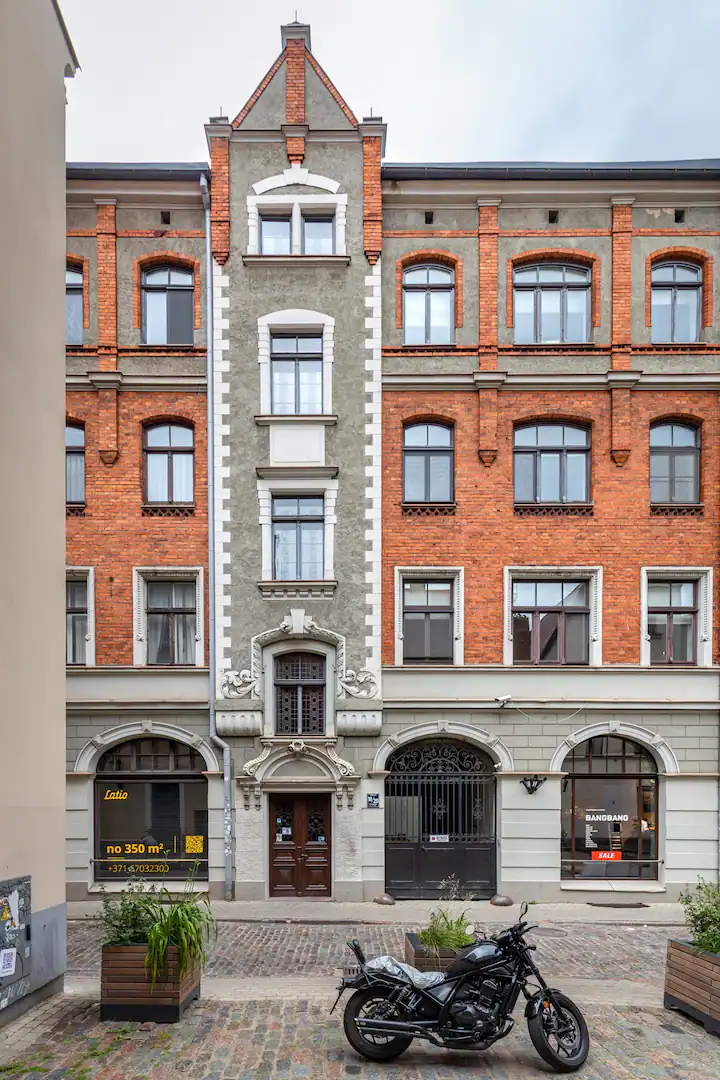
Brīvības 138: closest to cash. A historic building on one of Riga’s main arteries, converted to around 90 apartments: the original scheme had 78 units including commercial premises, and splitting the largest apartments lifted the count. Construction is well advanced, roughly two-thirds of the apartments are reserved and signing of the purchase agreements started in July. The value here comes from execution speed: the product is nearly finished and the buyers are already committed, so this is the shortest path to distributions of the three. Targeting 20–30% IRR annualy.
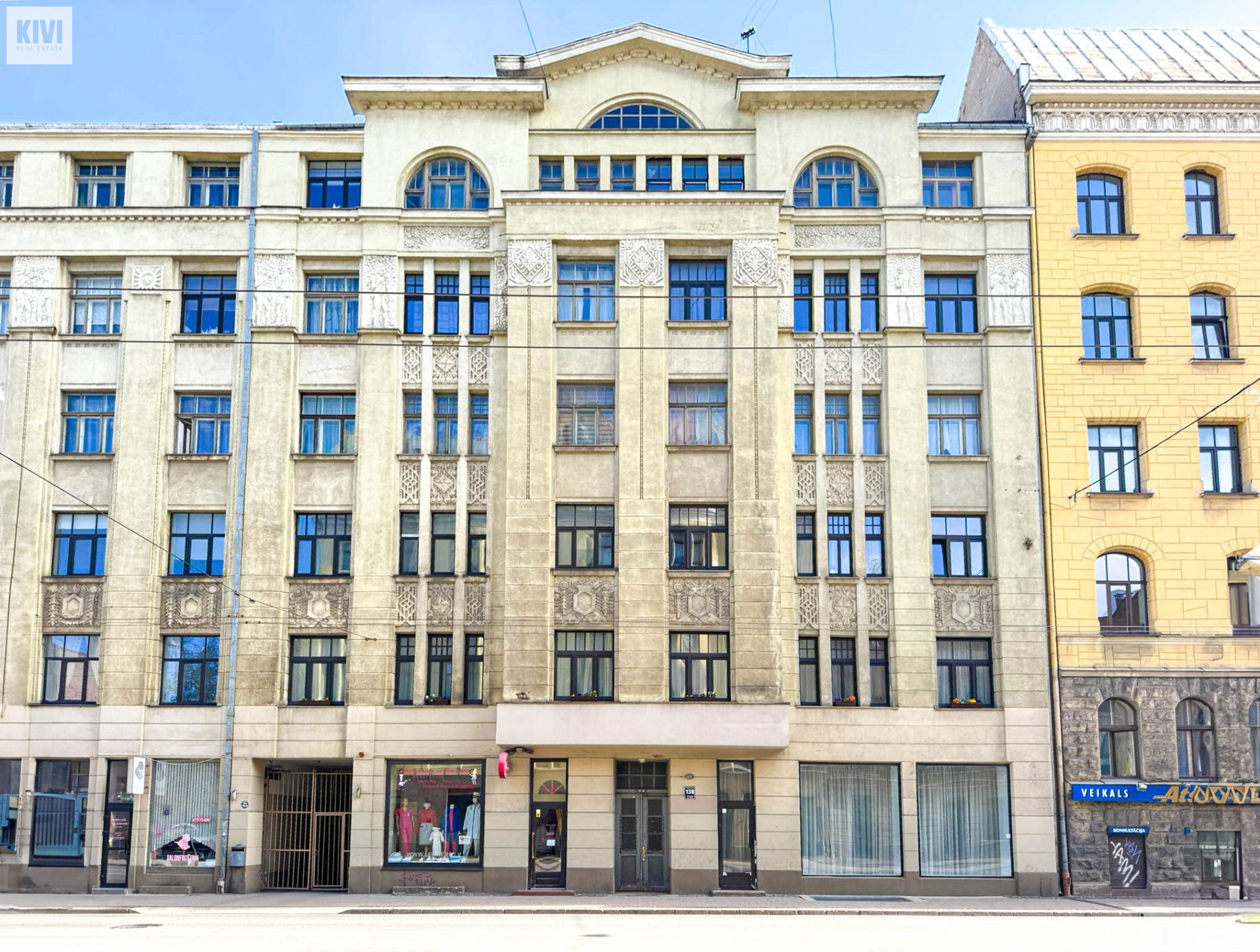
Fiziķu nams (Krīvu 11): changing what a building is for. A former scientific facility that nobody in the market had a use for, becoming 117 apartments. Demolition and clean-up are complete and the fund is fully subscribed at €2.5 million. The value comes from the conversion itself: we bought a building priced for its old purpose and are giving it a new one, which is the least competitive way to buy square metres in this city. Targeting 25–40% IRR annyally: the widest range of the three, because a conversion of this kind carries the widest spread of outcomes.
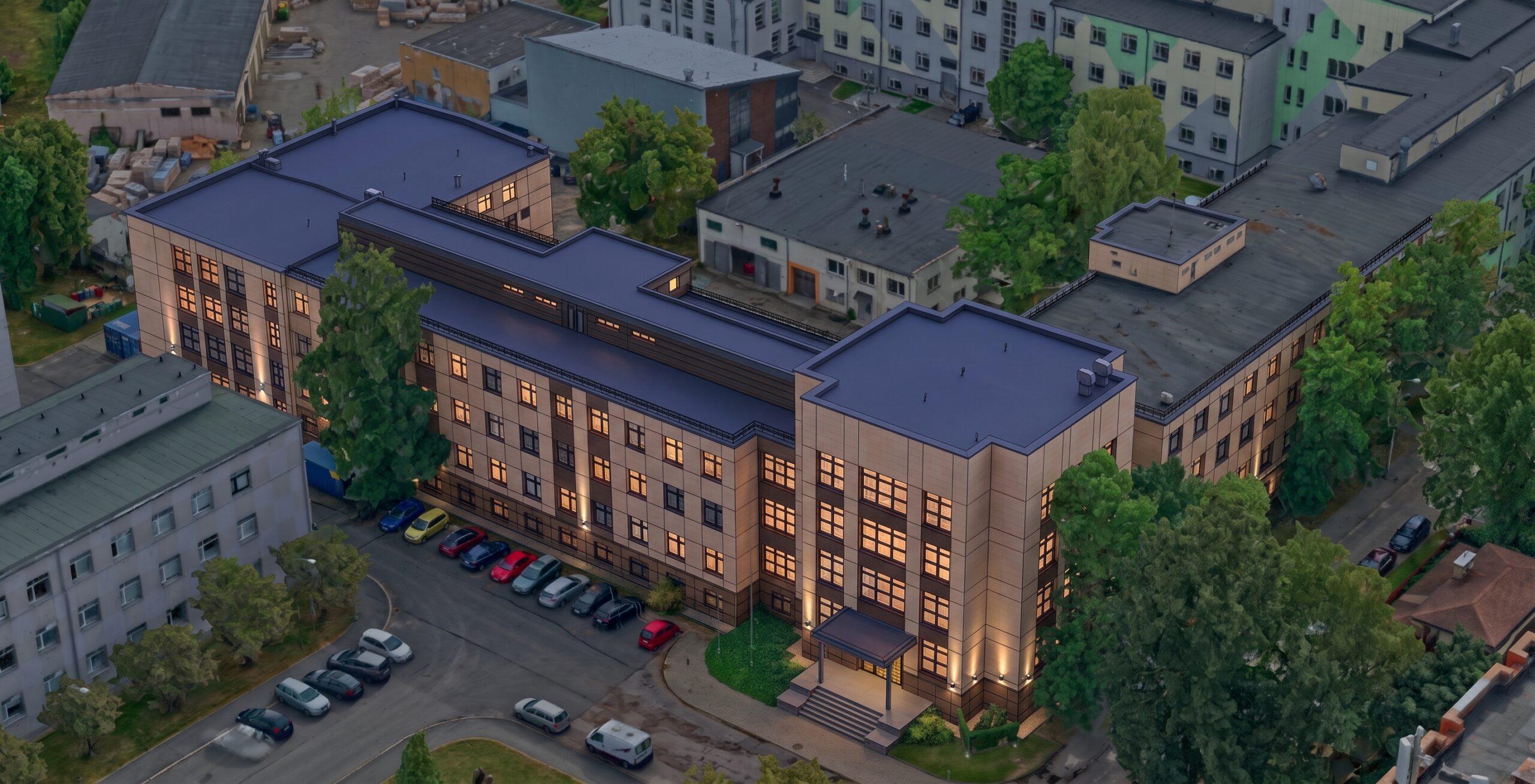
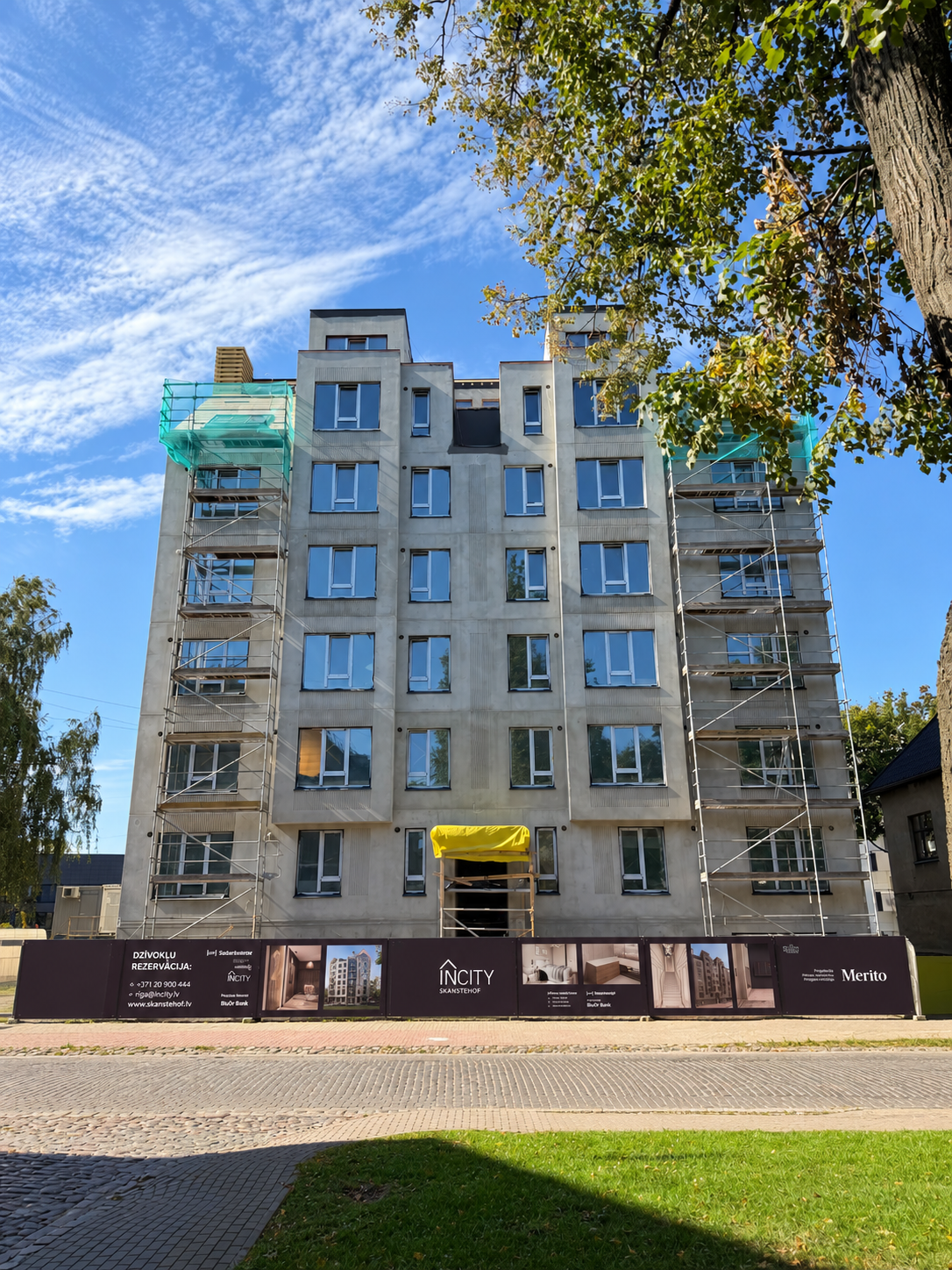
Hospitāļu 49 (Skanstehof): the new-build furthest along. Ground-up construction rather than conversion, and the most advanced of our new-build projects: the building is roughly half built and about a quarter of the 33 apartments are already reserved. The value here comes from building at a cost set before the current market and selling into it: a straightforward development margin, with none of the permitting or heritage risk the conversions carry. Targeting 17–25% IRR annualy.
Different entry logic, different duration, different risk, to fit different investor preferences, with the same discipline underneath each one.
How fast this moves
The clearest signal we get is how quickly investors commit. We announced the Valdemāra 55 fund (Club Central Residence III, Phase 1) on a Wednesday. Within roughly thirty hours the fifteen investors needed had confirmed the full amount, and we closed the raise and told everyone else the project was no longer available. Final commitments came to €1,655,000 against a €1.6 million target. That is a good problem, but it is still a problem: if you are not on the list early, you miss projects.
Every project described above sits in its own single-asset fund: one building, one vehicle, one decision. But it puts real work on the investor. You have to pick, keep picking, and be available when a raise opens and closes inside two days.
Real Estate Feeder Fund I is our answer for investors who want exposure to the Merito real estate portfolio through a single investment. One commitment is spread across up to ten of our single-asset funds, at between 5% and 25% per fund, so no single asset can dominate the outcome. Minimum commitment is €500,000 and total commitments are capped at €5 million. The fund targets a net IRR of 15–30%, generated at the level of the underlying funds.
Two points matter commercially. There are no additional management or performance fees at the feeder level, so there is no double layer of cost between you and the assets. And Merito co-invests alongside investors in every underlying fund, as we always have. Reporting and distributions come quarterly, direct to your account, with no vehicles or paperwork for you to administer.
This is aimed at investors deploying institutional-size tickets: family offices, larger private holdings, and investors who want Merito real estate as a line in a portfolio rather than a series of individual buildings.
Full terms are set out in the Feeder Fund materials, which we share on request.
Looking Ahead
A word on scale. Bonava, the largest residential developer in Latvia, sold around 2,100 apartments in Riga between 2020 and 2024 and had 367 units on the market in spring 2025, against YIT’s 168, both figures from the same market compilation by Invego, reported by ERR in April 2025. Our 1,000+ is a pipeline rather than completed sales, so it is not a like-for-like comparison, but it does put us in the same conversation as the largest developers working in this city, and we are one of very few doing it with locally raised capital.
So we intend to be more visible from here. The projects we buy are sourced off-market, and the more people who know what we look for, the more of them come to us firs
The pipeline supports it. We expect to bring at least one new project to investors every second month, and current visibility points to more. Beyond real estate, the wider Merito portfolio has been busy: BESS across the solar portfolio, fintech, and healthcare consolidation, and we will cover those in the next edition.
Want the next project before it fills?
Our raises are rather quick. Get in early by writing directly to our team or registering your interest now: investor.relations@meritopartners.com
Click Here To Register →– The Merito Partners Team