Merito Partners Newsletter Q3 2026

Update No. 20
September 2026

This edition focuses on real estate: what the portfolio has actually returned, how the live projects are set up, and a new way to hold the strategy. It covers Merito’s first exit and the capital that has come back to investors, why Riga’s new-build segment still has not repriced with the rest of the market, and Real Estate Feeder Fund I.

It has been two and a half years since Merito Partners closed its first real estate fund. In that time the strategy set out in Newsletter No. 18 has moved from thesis to distributions. Four funds have returned investor capital in full, each within 16 to 24 months of inception, the first profit has been paid out, and the portfolio now runs to more than 1,000 apartments across fourteen funds.

SECTION 1
The First Exit
Kalēju 18/20 has distributed its first profit at a realised 30% IRR. Four funds have now returned investor capital in full.

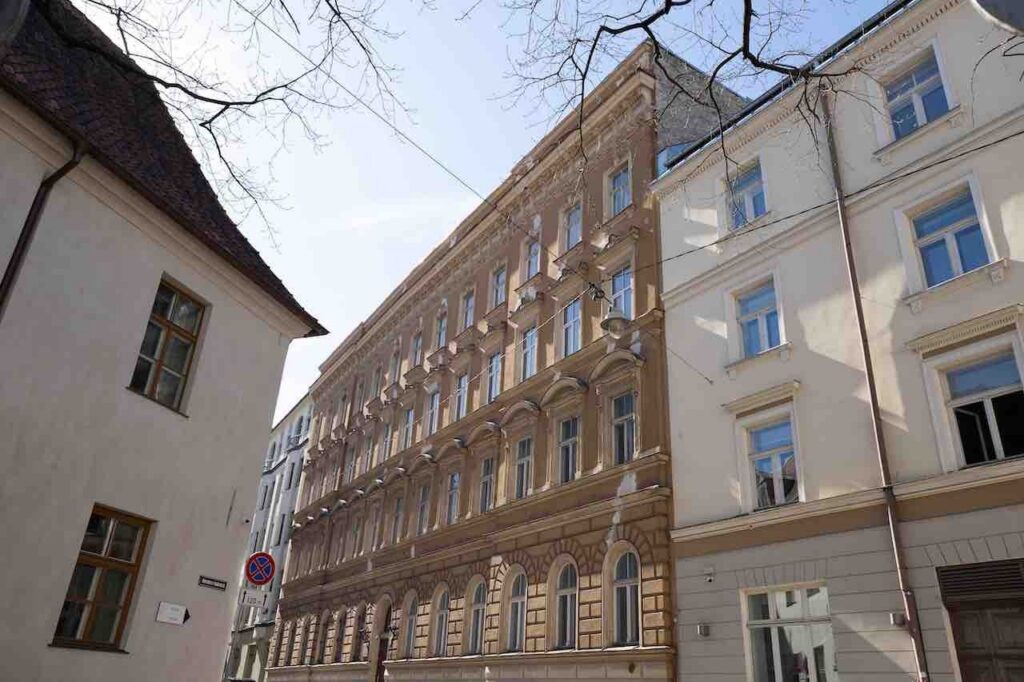
Kalēju 18/20 was the first fund and it is the first to return profit. Seventeen units in Riga’s Old Town, bought as a single lot for €2.9 million against a valuation of roughly €4.5 million if sold unit by unit. The work was everything in between: separate the units, fix them, design, renovate, furnish, operate, build a track record, sell. €1.0 million of profit has now been distributed to the nine investors in the fund: a realised 30% IRR and 1.8x on capital, against the 20–30% targeted at launch. The follow-up sale of the ground-floor units is expected to bring the IRR into the 35–40% range.
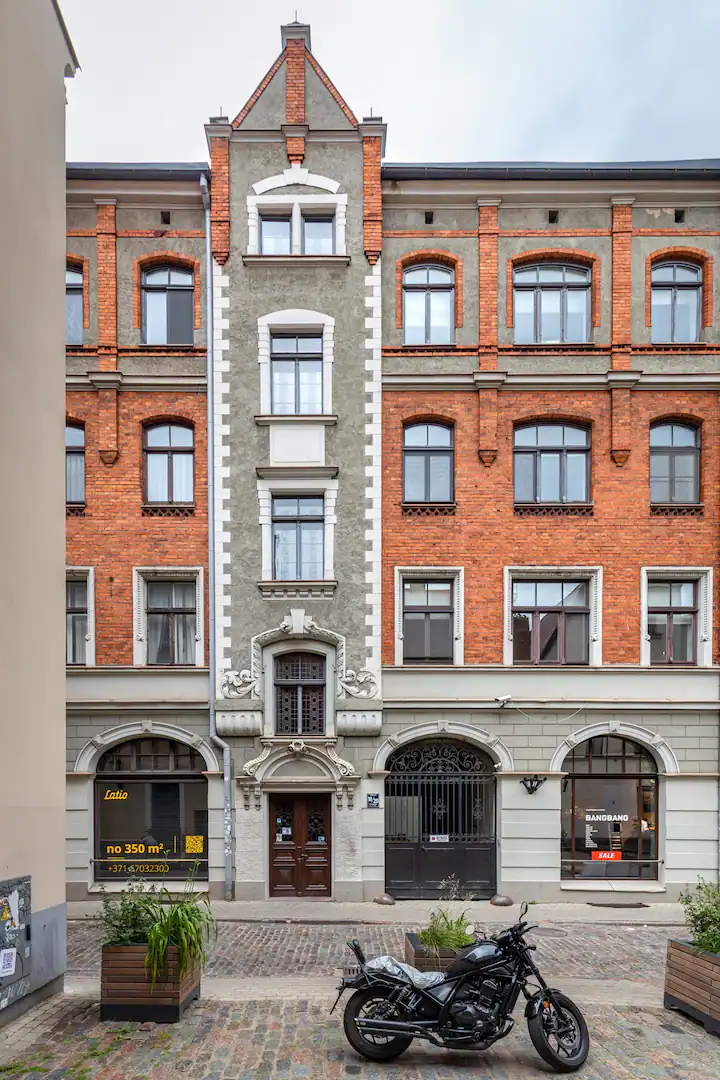
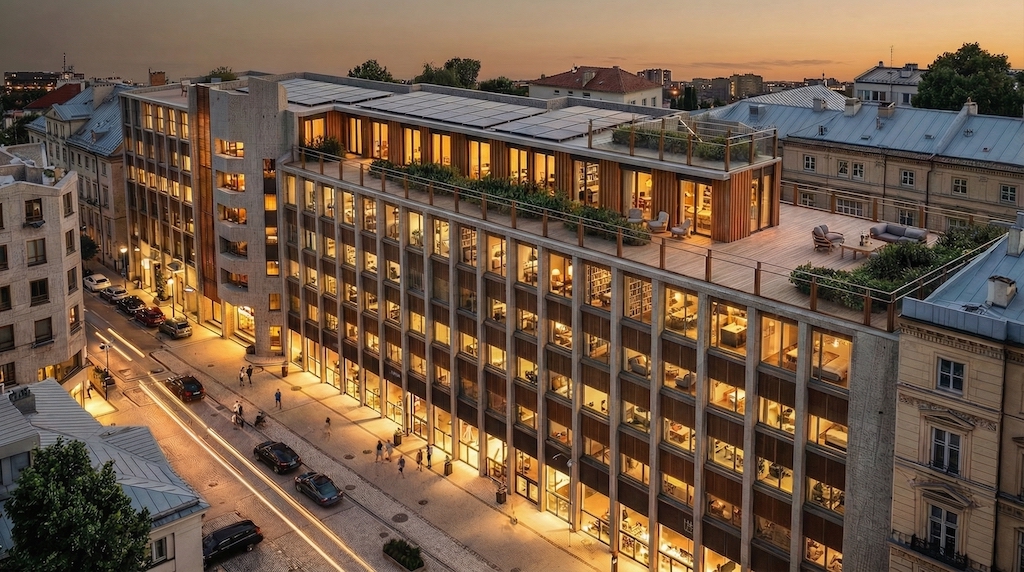
Kalēju 18/20, Riga Old Town

Three more funds have returned investor capital in full, each within 16 to 24 months of inception. The speed matters here as much as the multiple. Pasta 6 has returned the full €2.1 million raised in February 2024, with the exit itself still in progress. Ulmaņa gatve 2 has repaid its €2.5 million; that asset (40,000 m² of industrial space on a 6.5-hectare leasehold) is carried materially above acquisition cost and is now in strategic review, where we are weighing a hold against a sale. A fourth fund returned capital with a small positive return after the transaction was terminated by the seller (confidentiality obligations prevent us from naming it or going further). A fifth is contracted to return 100% of capital in Q4 2026, fourteen months after inception.

The portfolio as it stands

Fourteen real estate funds have been launched since December 2023. More than €28 million has been raised across them, over €11 million has been distributed back, and the projects in the portfolio carry a combined sales value of roughly €120 million.

14
Funds launched
€28m+
Raised from investors
€11m+
Distributed back
€120m
Portfolio sales value

Who is behind it

Around 100 investors have made over 240 separate commitments to Merito real estate funds: an average of close to three funds each, at an average commitment of around €115,000. Roughly half have backed a single fund so far; at the other end, a core group of five has backed nine or more. That pattern matters more to us than the headline number. It means the portfolio grows mostly because people who have invested with us come back for the next one, and it is why a raise can close in days rather than months.

The portfolio deliberately spans four different kinds of work rather than one: building new residential from the ground up; converting historic and Soviet-era buildings to modern residential use; buying stranded assets and selling them down unit by unit; and adding value to industrial property. That mix means we are never dependent on a single exit route or a single type of buyer, and it lets us be selective about which assets we back.

One exit distributing profit, four funds with capital returned, €11 million+ back to investors. The pipeline brings a new opportunity to investors roughly every second month.

SECTION 2
The Price Gap, and Building Into It
Riga still trades well below Tallinn and Vilnius. Three live projects show three different ways of capturing that.

The case for Riga has not changed since we set it out in Newsletter No. 18. Apartment prices in Vilnius rose 11.1% in the twelve months to April 2026 and 12.1% across Lithuania’s largest cities, on the Ober-Haus index. Tallinn has been the slowest of the three capitals — new-build prices there have barely moved in two years and transaction volumes are still close to their lowest in over a decade — and that matters less than where it stalled: a new apartment in Tallinn still averages around €4,200 per m², against roughly €2,600–2,850 in Riga’s primary market. Even standing still, Tallinn is priced about 50% above Riga. Latvian housing prices overall moved at around 11%, but new-build prices rose only 4–5%: Latvia’s statistics bureau recorded new-dwelling prices up just 1.2% year on year in Q2 2025 against 8.3% for existing dwellings, and the pattern has held. The segment we actually operate in has not repriced with the rest of the market. And because Vilnius is compounding from a higher base while Tallinn simply sits on one, the absolute gap in euro per square metre between Riga and both peers has widened rather than closed.

Demand underneath that is real and financeable. Latvijas Banka reported household lending up 10.6% year on year at the end of June 2026, with mortgage lending up 9.5% and new housing loans running at about €120 million a month through the first half. Total domestic credit still stands at only 31.8% of GDP against a euro area average of around 73%, so the room to grow is structural rather than cyclical. That growth has continued through a turn in the rate cycle (the ECB moved rates up again in September), which tells us the demand is coming from households and banks catching up on a decade of under-lending, not from cheap money.

Supply is not keeping up. The number of apartments on offer in Riga was down 24% year on year by August 2025, with stock in the largest housing estates down 26% (Arco Real Estate), and the imbalance is regional: in Vilnius, developers completed 2,787 apartments for sale in 2025 against more than 5,700 sold on the primary market (Ober-Haus). Latvia also leads the EU on overcrowded housing, well above both Lithuania and Estonia.

Three projects, three different approaches

Brīvības 138: closest to cash. A historic building on one of Riga’s main arteries, converted to around 90 apartments: the original scheme had 78 units including commercial premises, and splitting the largest apartments lifted the count. Construction is well advanced, roughly two-thirds of the apartments are reserved and signing of the purchase agreements started in July. The value here comes from execution speed: the product is nearly finished and the buyers are already committed, so this is the shortest path to distributions of the three. Targeting 20–30% IRR annualy.
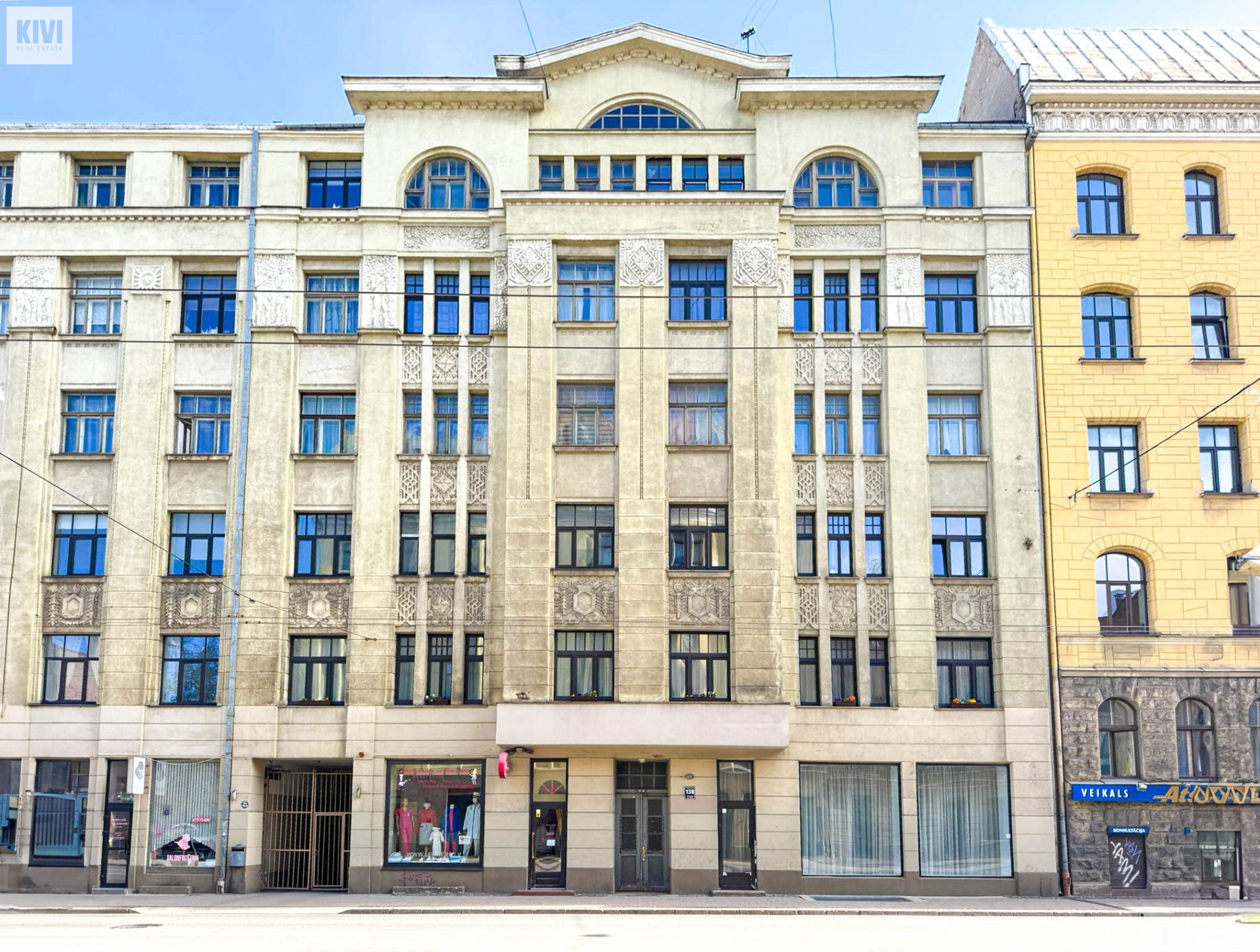
Brīvības 138, Riga

Fiziķu nams (Krīvu 11): changing what a building is for. A former scientific facility that nobody in the market had a use for, becoming 117 apartments. Demolition and clean-up are complete and the fund is fully subscribed at €2.5 million. The value comes from the conversion itself: we bought a building priced for its old purpose and are giving it a new one, which is the least competitive way to buy square metres in this city. Targeting 25–40% IRR annyally: the widest range of the three, because a conversion of this kind carries the widest spread of outcomes.

Krišjāņa Valdemāra iela 55, Riga

Hospitāļu 49 (Skanstehof): the new-build furthest along. Ground-up construction rather than conversion, and the most advanced of our new-build projects: the building is roughly half built and about a quarter of the 33 apartments are already reserved. The value here comes from building at a cost set before the current market and selling into it: a straightforward development margin, with none of the permitting or heritage risk the conversions carry. Targeting 17–25% IRR annualy.
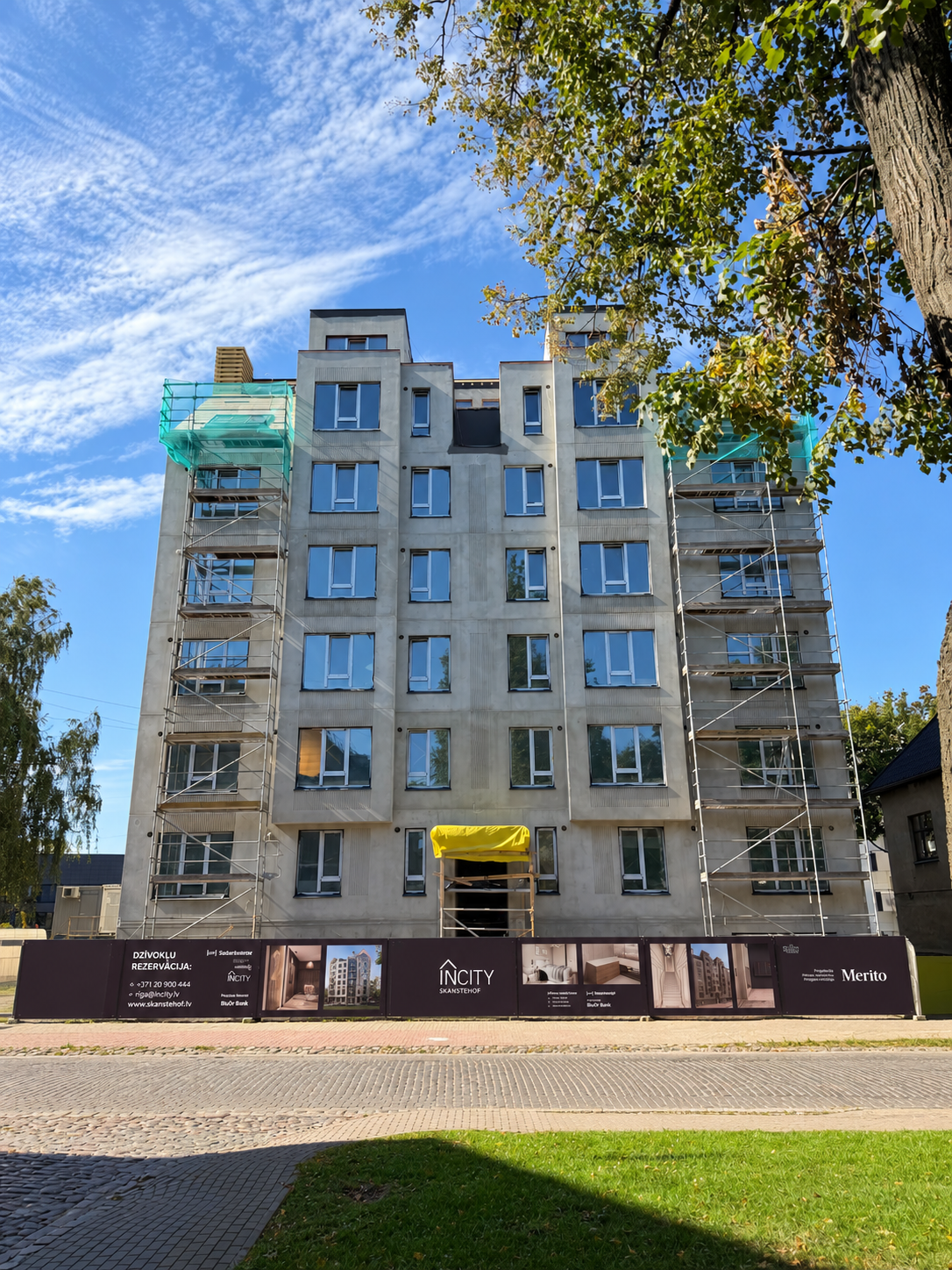
Hospitāļu 49, Skanstehof, under construction

Different entry logic, different duration, different risk, to fit different investor preferences, with the same discipline underneath each one.

How fast this moves

The clearest signal we get is how quickly investors commit. We announced the Valdemāra 55 fund (Club Central Residence III, Phase 1) on a Wednesday. Within roughly thirty hours the fifteen investors needed had confirmed the full amount, and we closed the raise and told everyone else the project was no longer available. Final commitments came to €1,655,000 against a €1.6 million target. That is a good problem, but it is still a problem: if you are not on the list early, you miss projects.

SECTION 3
A New Route In: Real Estate Feeder Fund I
Built for larger, more institutional investors (professional family offices and similar) who want an allocation, not a building.

Every project described above sits in its own single-asset fund: one building, one vehicle, one decision. But it puts real work on the investor. You have to pick, keep picking, and be available when a raise opens and closes inside two days.

Real Estate Feeder Fund I is our answer for investors who want exposure to the Merito real estate portfolio through a single investment. One commitment is spread across up to ten of our single-asset funds, at between 5% and 25% per fund, so no single asset can dominate the outcome. Minimum commitment is €500,000 and total commitments are capped at €5 million. The fund targets a net IRR of 15–30%, generated at the level of the underlying funds.

Two points matter commercially. There are no additional management or performance fees at the feeder level, so there is no double layer of cost between you and the assets. And Merito co-invests alongside investors in every underlying fund, as we always have. Reporting and distributions come quarterly, direct to your account, with no vehicles or paperwork for you to administer.

This is aimed at investors deploying institutional-size tickets: family offices, larger private holdings, and investors who want Merito real estate as a line in a portfolio rather than a series of individual buildings.

Full terms are set out in the Feeder Fund materials, which we share on request.

Looking Ahead

A word on scale. Bonava, the largest residential developer in Latvia, sold around 2,100 apartments in Riga between 2020 and 2024 and had 367 units on the market in spring 2025, against YIT’s 168, both figures from the same market compilation by Invego, reported by ERR in April 2025. Our 1,000+ is a pipeline rather than completed sales, so it is not a like-for-like comparison, but it does put us in the same conversation as the largest developers working in this city, and we are one of very few doing it with locally raised capital.

So we intend to be more visible from here. The projects we buy are sourced off-market, and the more people who know what we look for, the more of them come to us firs

The pipeline supports it. We expect to bring at least one new project to investors every second month, and current visibility points to more. Beyond real estate, the wider Merito portfolio has been busy: BESS across the solar portfolio, fintech, and healthcare consolidation, and we will cover those in the next edition.

Want the next project before it fills?

Our raises are rather quick. Get in early by writing directly to our team or registering your interest now: investor.relations@meritopartners.com

Click Here To Register →

– The Merito Partners Team

Merito Partners Newsletter Q2 2026

Update No.19
June 2026

This newsletter arrives at a significant milestone for Merito. After eighteen months of work — due diligence, negotiation, structuring, and closing — we have completed Merito’s largest private equity buy-out to date. The acquisition of Livlande Agro, the most efficient pig farming group in the Baltics, closed in June 2026. It is the most complex transaction we have executed, and it marks a new chapter for Merito Partners.

This transaction does not change what Merito is — it confirms it. We have always focused on succession-driven situations in the Baltic region, where ownership transitions create windows that are too short for most institutional capital to act on. Livlande is exactly that: a sector-leading business, built and run by its founder, now entering its next phase with Merito as the strategic partner.

Section 1

At the end of 2024, we started looking seriously at the Livlande Agro brand. By June 2026, we had closed. Eighteen months of work on what we internally called Project Truffle – culminating in one of the largest local capital buy-outs in Latvia in recent years.

The deal sits squarely in the kind of situation Merito was built for: a founder-led business with a 29-year track record, institutional-quality operations, and a succession dynamic that created a window of opportunity. NCH Capital and the original Danish financial investors had been with the company for over fifteen years. They were ready to exit, while the founding CEO, Alex Rasmussen, was not going anywhere – he wanted the business to continue growing with new partners and increase his stake in the business.

What is Livlande?

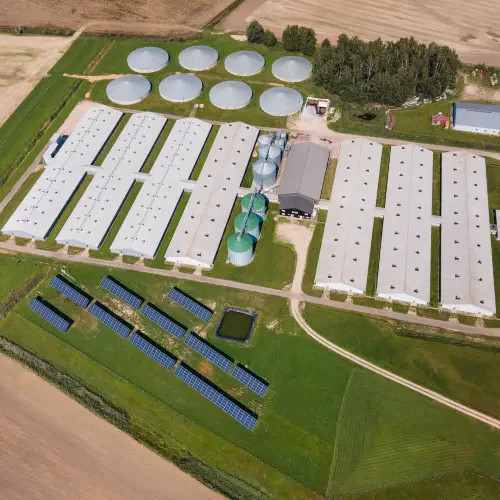
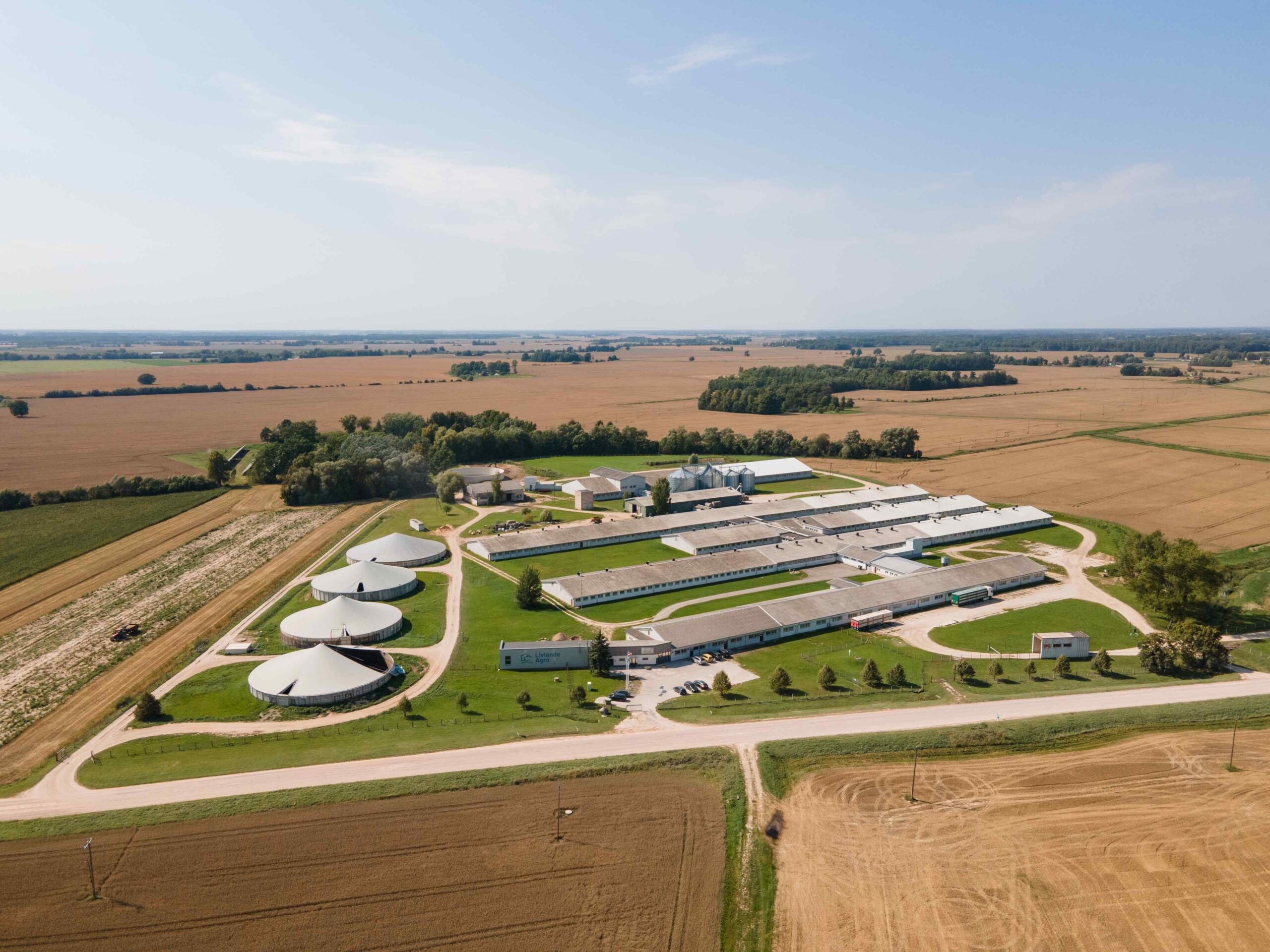
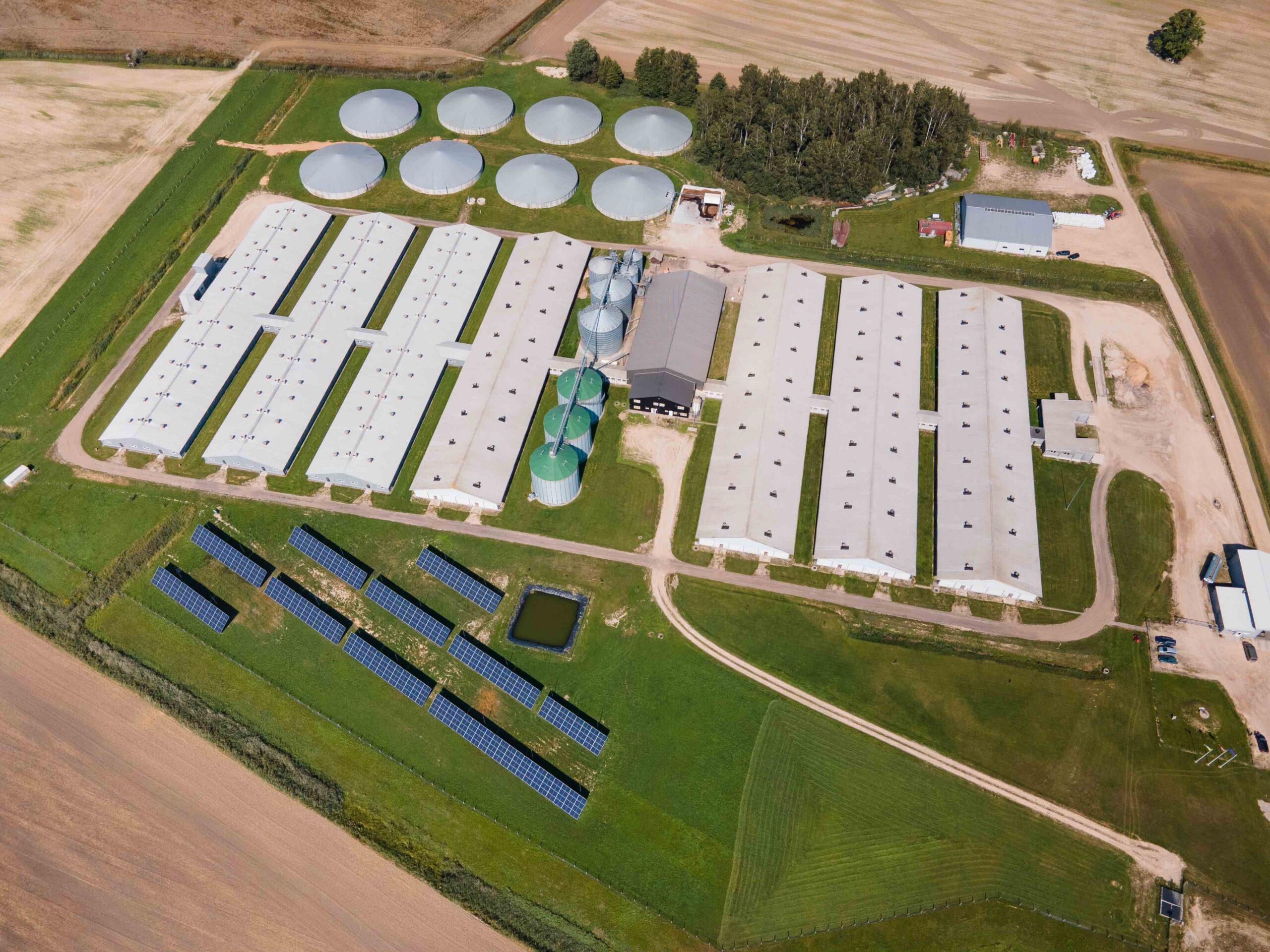
Livlande is the second-largest pig farming group in Latvia, with approximately 20% of the domestic market. It operates four farms – two near Cēsis, two near Bauska – producing over 100,000 finisher pigs per year. The business is vertically integrated: it grows a significant share of its own feed on 1,414 hectares of owned arable land and over 400 hectares of leased land, generates solar energy on-site, and uses pig manure as fertilizer in a closed-loop system.

The numbers are straightforward. Revenue of €17.1 million in 2025. Normalized EBITDA of €5.4 million. An equity ratio of 88%. The business has never posted a loss in its history, and since 2022, it has distributed more than €14.5 million through dividends and share capital reductions to its shareholders and an additional €4.8m to debt providers.

€17.1m
Revenue 2025
€5.4m
Normalized EBITDA
20%
Latvia market share
1 414 ha
Owned arable land

What makes Livlande exceptional is not the scale – it is the efficiency. Compared to Latvian and British benchmarks, Livlande produces more piglets per sow, has lower post-weaning mortality, and uses less feed per kilogram of pig weight. At identical facility and market conditions, that efficiency advantage translates to approximately €1.4 million more in EBITDA per year versus the industry average. That edge has been built over decades and is impossible to replicate for newer and smaller players.

While pork is the most consumed meat in the Baltics and Latvia, we experience a significant production deficit (~50% imported meat) and as a result all the major local players, including Gaižēni are systemic companies with very strong entry barriers.

The Baltic pig farming market is consolidating. Industrial-scale farms with 500+ sows have held their position, while small farms have closed down. The top five players in Latvia already control 60–70% of the market. Livlande is positioned to continue gaining share — both organically and through acquisition.

The deal structure

Total enterprise value was financed by €9 million of equity, €11m of bonds, and several million euros of deferred payments. Merito and co-investors contributed €9.1 million in equity. A private placement of €11.0 million in senior secured bonds – arranged by Signet Bank, secured against the farms and land at a conservative 51% LTV – was oversubscribed and provided the debt component. The founding CEO rolled over his stake and increased his shareholding to approximately 12.5% while also participating as a bond investor. Further payments to the sellers are based on future performance, structured to provide significant downside protection for equity holders.

The bonds carry a coupon of 7.5%, paid quarterly, with a 3.5 year maturity. Listing on Nasdaq Riga First North is planned within twelve months. Bond investors benefit from first-ranking pledges on both the real estate and the operating company shares.

This is Merito’s largest private equity buy-out – and our most complex transaction to date. It takes us into a different league in terms of deal size, capital structure, and Pan-Baltic visibility.

Livlande has all permits in place to expand capacity organically by approximately 20% in an industry where new permits are a key barrier to entry. Additionally, there are a handful of meaningful acquisition targets in the Latvian pig farming market, several of which have active succession situations in the near term. There are also energy-side opportunities we will evaluate as part of a longer-term strategy.

The foundations are solid – the business has been consistently maintained and the farms are in good operational order. We will build on that and pursue the opportunities above more actively than the previous ownership structure allowed.

Section 1

We have said since the beginning that Merito targets situations where a transition in ownership – not a macro bet, not a sector dynamic – creates the investment opportunity. Livlande is the clearest example of that thesis working at scale.

Alex Rasmussen founded the business in 1997. He built it from a greenfield project, scaled it through Danish private investment and later institutional capital from NCH, and took it to market leadership. After 15+ years, the institutional shareholders wanted liquidity. Alex wanted continuity and growth capital. The resulting window — a motivated seller combined with a highly capable management team that is staying put — is exactly what we look for.

Pan-Baltic: what comes after Livlande

The next transaction is already in progress – and the pipeline beyond it is taking shape. We are looking at several sizeable businesses, some with Pan-Baltic footprints, some national sector leaders. What unites them is the same angle that brought us to Livlande: a succession situation in the broadest sense. That can mean a founding generation ready to hand over the keys, institutional investors who have held a position for ten or fifteen years and need a credible exit path, or ownership structures that have simply outgrown their original purpose. In all cases, the business itself is sound; what is missing is the right next owner. We think that is where Merito fits.

We will share details as soon as the process allows. For now, we would simply note: if Livlande confirmed our ability to execute a private equity buy-out in Latvia, the next step is to demonstrate that the same approach works at Pan-Baltic scale.

Merito is not changing strategy. We are executing it at a larger scale – and with a clearer mandate to build a meaningful Pan-Baltic investment platform around businesses that deserve better ownership.

Looking Ahead

Q2 2026 has been the most active quarter in Merito’s history — and the pipeline going into the summer suggests that pace is not slowing down. The Livlande buy-out was the headline, but it was far from the only thing in motion. We are working in parallel on several significant transactions and initiatives: BESS (battery energy storage solutions) across our solar portfolio, new real estate special situations, a feeder fund for Mintos growth case and a healthcare consolidation play.

A lot has been done. A lot has been set in motion. Summer will be busy.

For our current investors, thank you for the trust you placed in us – in some cases before we had a track record in this type of transaction. For those following from the sidelines: our door is open.

📧  investor.relations@meritopartners.com

🌐  Click Here To Invest

— The Merito Partners Team

Merito Partners to invest EUR 6.3 million in the development of the historic “Tipogrāfu nams” property in Old Riga

Merito Partners’ real estate fund has acquired the historic building at Palasta Street 3 in Old Riga – known as Tipogrāfu nams (the Printers’ House) – for EUR 2.58 million. Total investment in the development of the property is planned to reach EUR 6.3 million. The building will be renovated and transformed into a residential rental property with compact apartments.

The building at Palasta Street 3 was designed by architect Heinrich Karl Scheel and constructed at the end of the 19th century in the area between Old Riga and the Daugava waterfront. Until 1939, it belonged to the Baltic German Hecker family and housed the Latvian Military Printing House. Later, the building became home to Riga Secondary School of Crafts No. 2, where future printing industry professionals were trained.

Following renovation, the Printers’ House will be redeveloped into a contemporary residential building offering compact apartments for short – and medium-term rentals. The project will include 25 square meter studio apartments and 40 square meter one-bedroom apartments. All apartments will feature loft-style interior solutions, preserving the building’s high ceilings while providing fully equipped living spaces tailored to the needs of tenants.

Igors Terehovs, Partner at Merito Real Estate Management: “The location of the Printers’ House next to Old Riga and the 11 November Embankment, together with its historical heritage, creates a unique opportunity to develop a modern residential project in the city centre while preserving the building’s identity and adapting it to the needs of today’s rental market. The strategy of the specialised real estate fund managed by Merito Partners is to invest Latvian capital in the development of promising properties, thereby contributing to the improvement of Riga’s housing stock by creating financially accessible homes that meet modern living standards.”

The Merito Real Estate P3 Fund XI has attracted investments from 20 private investors from Latvia, and the fundraising process has been completed.

Since 2023, Merito Partners has established more than 10 private equity investment funds to implement its specialised real estate investment strategy. The funds already own properties in Old Riga at Kalēju Street 18/20 and Pasta Street 6, the industrial complex of the former Straume factory at Kārļa Ulmaņa gatve 2, the historic property at Brīvības Street 138, the former scientific complex building at Krīvu Street 11, the property at Skolas Street 21 — the former Designers’ Union building — as well as several other development projects.

Together with partners, Merito Partners is also developing the residential project Skanstehof at Hospitāļu Street 49 in Riga. The total number of apartments currently planned across projects developed by Merito Partners already exceeds 600, while the total value of assets intended for sale exceeds EUR 80 million. In parallel, the company continues active due diligence, acquisition and gradual expansion of its property portfolio.

Merito Partners establishes the healthcare services platform MeDi Group

Merito Partners (Merito), in collaboration with industry expert Dins Šmits and Integer Consulting, has established the healthcare services consolidation platform MeDi Group to develop a professionally managed healthcare group and network of clinics across the Baltic region. It is planned that up to EUR 20 million of private investor capital will be invested in the platform. The total investment of MeDi Group in healthcare will be further increased through bank financing or bond issuance for each investment.

MeDi Group is being developed with the objective of building a professionally managed healthcare group by consolidating high-quality clinics offering diagnostic, treatment, rehabilitation, and wellness services.

Mikus Janvars, Co-founder and Managing Partner of Merito: “The establishment of MeDi Group marks Merito’s entry into long-term, evergreen investments in the healthcare sector—one of the most resilient and socially significant sectors in the Baltics. In response to long-term structural trends, including aging of population, historically low healthcare expenditure, and steady market growth, we see substantial development potential and an opportunity for long-term investment. MeDi Group will combine strong governance under the leadership of experienced industry professional Dins Šmits, excellence in medical and patient experience, and local capital, creating a company with significant growth potential and a positive contribution to the sustainability of healthcare.”

To support the development of the healthcare consolidation platform, the investment fund Merito Management Target Fund VI has been established. The initial capital raising phase has been completed, during which 10 private Latvian investors invested in the fund, and further investor onboarding will continue alongside the development of MeDi Group.

“The attraction of Latvian capital and investor confidence ensures sustainable development opportunities for MeDi Group. The first medical facility co-financed by MeDi Group —the ear, nose, and throat clinic LORENT, led by otolaryngologist Dr. med. Rūdolfs Jānis Vīksne—will open in May of this year. Overall, we plan to consolidate up to ten private clinics of various profiles, providing support and financing both for the development of existing private medical institutions and the establishment of new clinics,” says Dins Šmits, Head of MeDi Group.

About Integer Consulting

The sole owner of Integer Consulting, Dins Šmits, is a healthcare industry expert with more than 25 years of management and entrepreneurial experience in the healthcare sector. He is also a co-founder and partner in several high-quality medical institutions, including Prof. Skrides sirds klīnika, Baltijas ķirurģijas centrs, SIA Osteomed, as well as the fintech company bonusukarte.lv.

Merito Partners agrees to acquire Latvia’s leading livestock and agricultural company Gaižēni

Merito Partners, together with its investors, has reached an agreement to acquire the agricultural company SIA Gaižēni, becoming its majority shareholder.

The transaction between the current owners of Gaižēni – U.S. investment fund group NCH Capital and minority shareholders from Denmark – provides that Merito Partners will become the majority shareholder, alongside the company’s founder and long-time CEO, Alex Rasmusen. This is the largest transaction in the agricultural sector in recent years and one of the largest national capital buyouts in Latvia’s history.

Mikus Janvars, Co-founder and Managing Partner of Merito Partners, commented:
“The acquisition of SIA Gaižēni marks Merito’s entry into one of the historically strongest sectors of the Baltic economy—agriculture. We are pleased to add the flagship of Latvia’s livestock industry to our long-term (evergreen) investment portfolio. As a result of this transaction, the company will come under the ownership of Latvian entrepreneurs.”

Gaižēni, Latvia’s leading livestock farming company, was founded in 1997. It currently operates four pig farms in the regions of Vidzeme and Zemgale and manages an agricultural land portfolio of 1,400 hectares. In 2024, the company’s turnover exceeded EUR 18.5 million, with profits reaching EUR 4 million.

The transaction states that the company’s management team will reinvest in its development alongside Merito. “The introduction of new investors is a carefully planned and strategically important step in the long-term development of Gaižēni. I am grateful to the previous investors for their long-standing support in the company’s growth. After 30 years of living and doing business in Latvia, I am truly pleased with the confidence shown by local investors. Local capital will help strengthen our long-term direction and contribute to the growth of Latvia’s agricultural sector,” said Alex Rasmusen, Founder and CEO of SIA Gaižēni.

A notification has been submitted to the Competition Council, and completion of the transaction is expected following its review and approval. The transaction is financed through investments from Latvian private investors, as well as bond financing arranged by Signet Bank.

Kārlis Cerbulis, Head of NCH Capital in the Baltics, commented:
NCH Capital’s financing and long-term support have enabled SIA Gaižēni to become a leading livestock and agricultural company in Latvia. We are pleased that its growth will continue in cooperation with Latvian investors. We are also glad that the company’s founder and CEO, Alex Rasmusen, will continue to lead and develop the business going forward.”

Merito Partners Newsletter Q1 2026

Update No.18
March 2026

This edition focuses on real estate – specifically, what Merito Partners has built, what the numbers look like, and where the strategy is heading next. It covers why Riga is the right market, what the portfolio has delivered in less than 30 months of execution, and Arhitektu nams – the most ambitious project yet and a preview of where this strategy is heading.

It has been just over two years since Merito Partners closed its first real estate fund. In that time, the strategy laid out in Newsletter No. 15 has moved from thesis to track record – and the results are giving every reason to accelerate.

Three things are covered here. First, why Riga is the right market – and why the window is not permanent. Second, what the portfolio has delivered in less than 30 months of execution. And finally, Arhitektu nams – the most ambitious project yet, and a signal of what comes next.

Walk through central Riga on a weekday morning and you will see something increasingly rare in a European capital: buildings worth restoring, priced as if nobody wants them. We think quite a lot of people will want them soon.

A decade of caution left Latvia behind

The 2008 financial crisis hit Latvia harder than almost any other European economy. Property prices collapsed by more than 50%. Households spent years paying down debt rather than taking on new mortgages. Banks tightened standards. Developers stayed on the sidelines. It was a rational response to a genuine shock – but it created a structural gap that persists today.

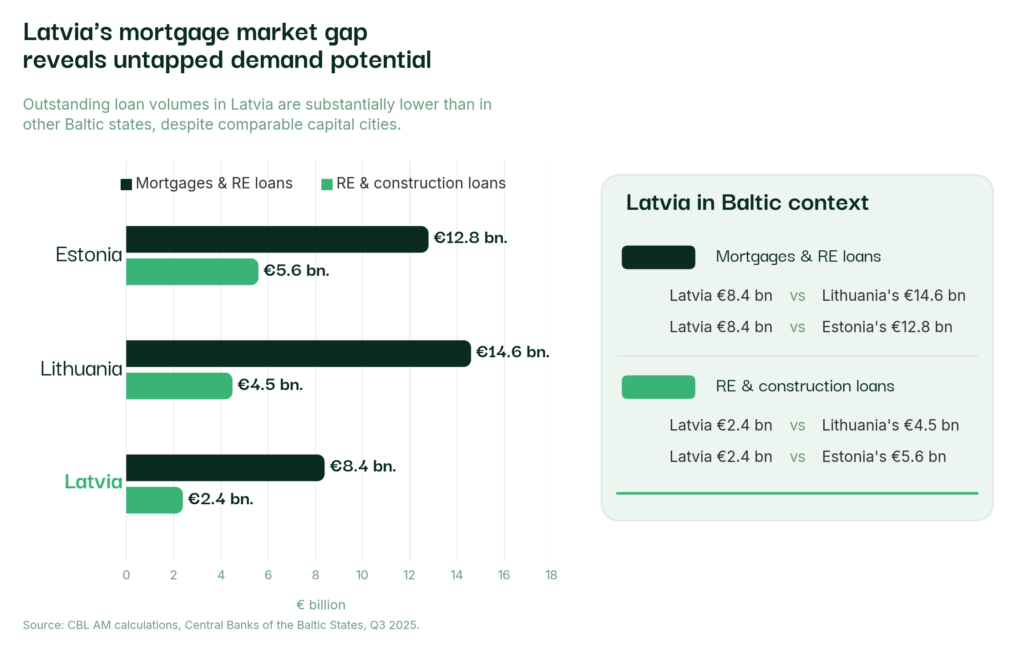
That gap is most visible in Latvia’s mortgage market. As of Q3 2025, outstanding mortgages and real estate loans in Latvia stood at roughly €8.4 billion – a fraction of Lithuania’s €14.6 billion and Estonia’s €12.8 billion. Traditionally, the vast majority of mortgages are concentrated in capital cities with comparable populations and income trajectories, presenting a major opportunity for Riga. Outstanding loans to real estate and construction tells the same story: €2.4 billion in Latvia, versus €4.5 billion in Lithuania and €5.6 billion in Estonia (Source: CBL AM calculations based on data from Central Banks of the Baltic States Q3 2025).

This is not weakness – it is latent demand. A population that has historically underinvested in homeownership, in a market where the conditions for doing so are now improving rapidly. As Latvian banks increase their appetite for real estate lending the pool of mortgage-eligible buyers expands. More buyers, same supply constraints. Supply, incidentally, is not rushing to catch up. New apartments entering the Riga market fell short of 2,200 units in 2025. The Colliers Latvia Residential Report 2025 projects roughly 2,500 units for 2026, rising to 3,000 in 2027 – enough to absorb demand at current pace, but not enough to rebuild the inventory buffer that the market has been drawing down (Source: Colliers Latvia Residential Report 2025).

The price gap that cannot last

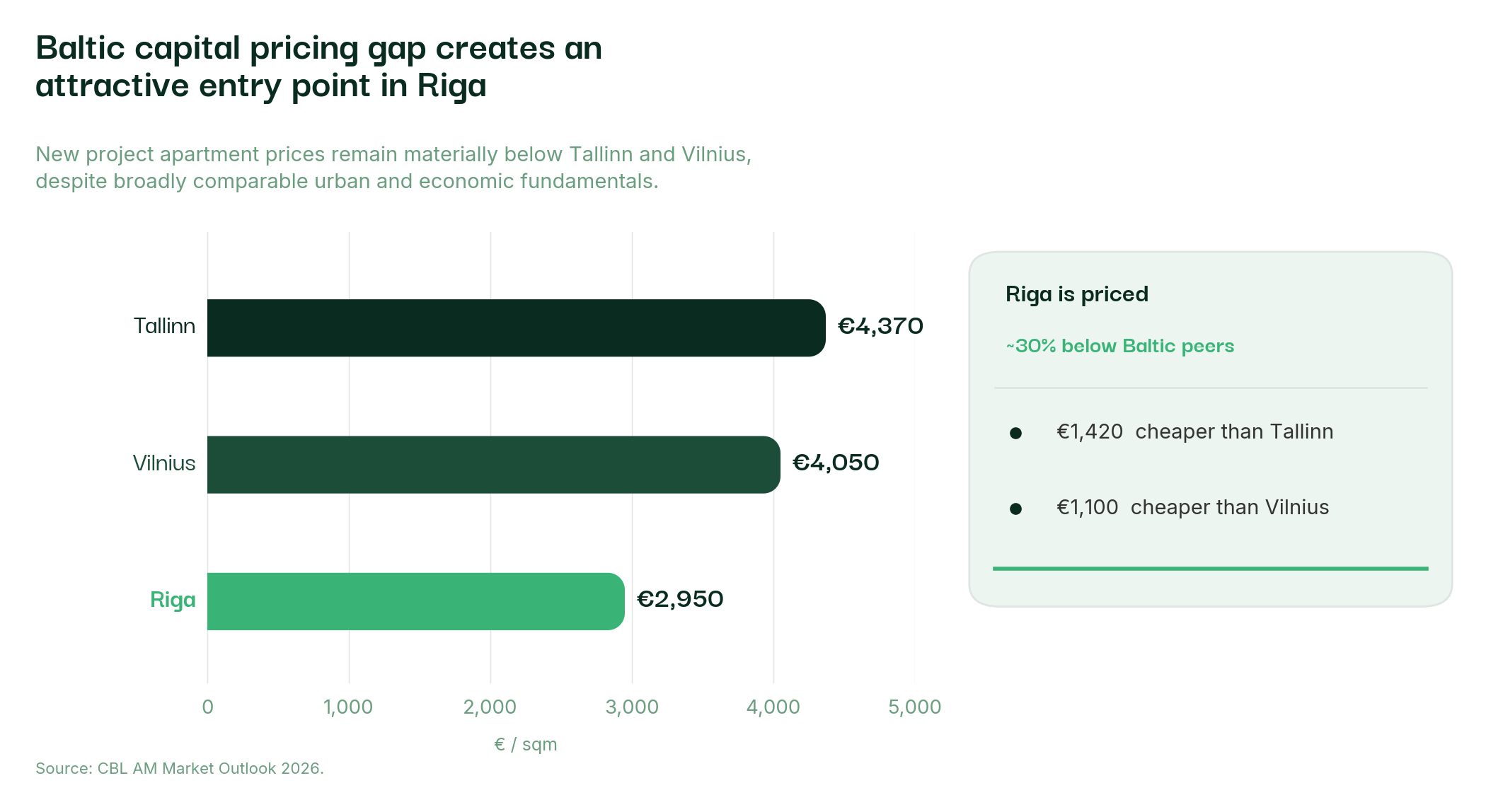
Which brings us to the number that matters most for investors analysing the return potential. New project apartments in Tallinn average: €4,370 per square metre. Vilnius: €4,050. Riga: €2,950. A 30–40% discount for a city with comparable history, urban quality, income level and professional workforce (Source: CBL AM, Market Outlook 2026).

That gap is not explained by demand – Riga’s primary market recorded 2,186 registered transactions in 2025, up 38% from 2024, generating a record €310 million in total deal value (Source: Colliers Latvia 2025). It is not explained by construction quality – the same developers active in whole Baltics are building in Riga. It is explained by the post-crisis undersupply, the recovering mortgage market, and the lag in developer confidence – all three of which are now visibly reversing.

When Colliers surveyed the active pipeline heading into 2026, developers who had been sitting on the sidelines through 2022 and 2023 were announcing large-scale projects and expanding land banks. Developers do not do that if they expect prices to fall.

For repositioning projects with 24–36 month horizons, the combination of low entry prices, expanding buyer pools, and a closing valuation gap creates a return profile that is difficult to replicate in markets that have already re-rated. That is the environment in which our real estate strategy operates – and that is why we are moving now.

We said in Newsletter No. 15 that Merito Real Estate Special Situations would run on two principles: partnering with agile developers who put their own capital at risk alongside ours, and targeting repositioning of undervalued or mismanaged assets that the market has mispriced. The question was always whether execution would match the thesis. We can now answer that.

The two approaches in a nutshell

1st Approach: Partner with developers who co-invest 15–35% of capital, accept an investor-first return structure, and operate under a Shareholder Agreement with Merito as an appointed Management Board member. The developer brings execution skill. We bring disciplined capital and governance. Interests are aligned from day one.

2nd Approach: Find properties that are undervalued, mismanaged, or simply underused – and reposition them through a focused 24–36 month strategy. Not speculative development. Not long holding periods waiting for macro tailwinds. Active value creation: acquire, renovate, convert, exit.

These are not abstract principles. Every fund in our portfolio – from the first closing in late 2023 to the latest one in 2026 – has been structured around one or both of them.

Where we started, and where we are

December 2023. Merito closes its first real estate fundKalēju 18/20, a property in Riga’s Old Town – with nine investors and €1.3 million in committed capital. At the time, we had no track record in real estate. What we had was a thesis, a team with deep local market knowledge, and the discipline to structure every deal with investor protection first.

By February 2024, we had closed a second fundPasta Street 6. By the second half of 2025, we were running six new funds in parallel, covering projects from Brīvības Street 138 to Skanstes Hof. Today, across ten funds, approximately 80 investors have made nearly 180 individual investment commitments, totalling close to €20 million.

Merito Real Estate Portfolio
Pausa Nams
Pausa Nams
Brīvības 138
Brīvības 138
Fiziķu Nams
Fiziķu Nams
Skanstehof
Skanstehof
Matīsa 27
Matīsa 27


The pace has not been accidental. Each new fund has benefited from the lessons of the previous one – better deal structuring, due diligence, tighter governance, more experienced counterparties.

The results that matter most

Pasta Street 6 is the clearest proof of concept so far. Acquired in February 2024 for a total investment of approximately €5 million including bank debt, the property’s market value had reached 2.0x Equity Multiple by June 2025 – a period of roughly sixteen months. All investor equity is already fully repaid and exit planning is underway. Expected returns in the range 20–30% IRR per annum. It was income-generating within 14 months of acquisition.

2025: The year execution became visible

2025 was the year the Merito real estate strategy moved from something investors trusted on paper to something they could see working in practice. Six new funds launched. Four of them under the developer-partnership model, two under the repositioning model.

The deals covered a range of property types – a former scientific facility on Krīvu Street, a historic residential block on Brīvības Street, a residential development project on Ģertrūdes Street, a new residential development at Hospitāļu Street in partnership with InCity Capital. Each project different. Each structured the same way.

Every now and then, a project comes along that does not just fit your strategy – it defines it. Arhitektu nams is that project for Merito Real Estate.

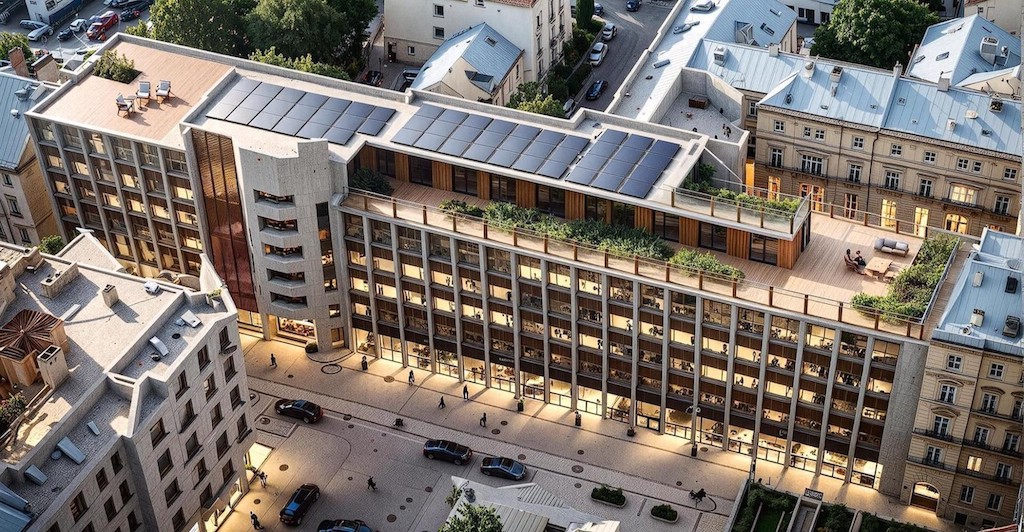
The building at Skolas Street 21 has stood in the Quiet Centre of Riga since 1987. Designed to house the Design Institute, it was built with the kind of structural generosity that Soviet-era public commissions occasionally produced: a reinforced concrete frame that has outlasted its original purpose by decades, high ceilings, wide corridors, and five elevators – a genuine rarity in buildings of this era and scale. It covers over 9,000 square metres. And until recently, it was sitting largely underused, its potential invisible to most of the market.

We acquired it for €5.9 million, co-financed with AS Signet Bank contributing €3.85 million. The total investment in the project is expected to surpass €14 million by completion.

What we are building

The transformation plan is straightforward in concept, demanding in execution: convert the building into approximately 250 compact studio and one-bedroom apartments, sized between 17 and 35 square metres, designed for the people who actually want to live in central Riga – students, young professionals, expats, long-term visitors. People for whom location matters more than space, and for whom the alternative is usually an ageing Soviet-era flat in a suburb, or an overpriced modern unit in a building that lacks character.

The Quiet Centre location is not incidental. Skolas Street 21 sits within walking distance of all key cultural and historical landmarks in central Riga and the established professional quarter of central Riga. It is, by any reasonable measure, a prime address – and it has been priced like it is not.

Beyond apartments, the plan incorporates commercial ground-floor space, co-working and recreational areas, storage solutions, and dedicated bicycle parking. These are not afterthoughts. They are the features that make a building genuinely liveable for the target demographic, and that drive long-term occupancy and rental income.

The numbers

Acquisition price€5.9 million
Bank financing (Signet Bank)€3.85 million
Total investment expected>€14 million
Building footprint>9,000 sqm
Target output~250 studios & 1BR apartments (17-35 sqm)
Equity raised€3.9 million from 22 private investors
Investment horizon36 months – renovate, convert, sell
Target net IRR20–30% per annum (MOIC ~1.8×)
Environmental advantage~50% lower impact vs. comparable new build

The environmental case is worth emphasising. Renovation of an existing concrete frame produces roughly half the carbon footprint of a comparable new construction. In a market increasingly attuned to sustainability credentials – and where EU green standards for residential buildings are tightening – this is not just an ethical argument. It is a commercial one.

A template, not a one-off

What makes Arhitektu nams significant is not just the scale – though at over 9,000 square metres and €14 million in total investment, it is the most ambitious project to date. What makes it significant is what it demonstrates: that Merito can identify, structure, and execute a project of this complexity with the same discipline applied to a €1.5 million single-building fund.

Work is already underway on another project that will exceed Arhitektu nams in scale. It is not ready to be announced yet – but it will be soon. What can be said is that investor appetite has been the clearest signal that this strategy is working. Across the portfolio, the total value of RE assets has reached €80 million, and plans already call for more than 600 new apartments across all projects.

The pipeline is not slowing down. It is accelerating. And we want our investors to be part of what comes next.

Interested in our next opportunity?

If the strategy we have described in this newsletter resonates with you – or if you are an existing investor curious about upcoming projects – we would be glad to talk.

📧  investor.relations@meritopartners.com

🌐  Click Here To Invest

— The Merito Partners Team

Merito Partners to invest EUR 25 million in energy storage systems at solar parks

Merito Partners together with renewable energy company Saules Energy, has launched the modernization of its 71.5 MW solar energy portfolio by integrating battery energy storage systems (BESS). The total investment in the project amounts to EUR 25 million, with EUR 13 million in financing for the first phase provided by Signet Bank.

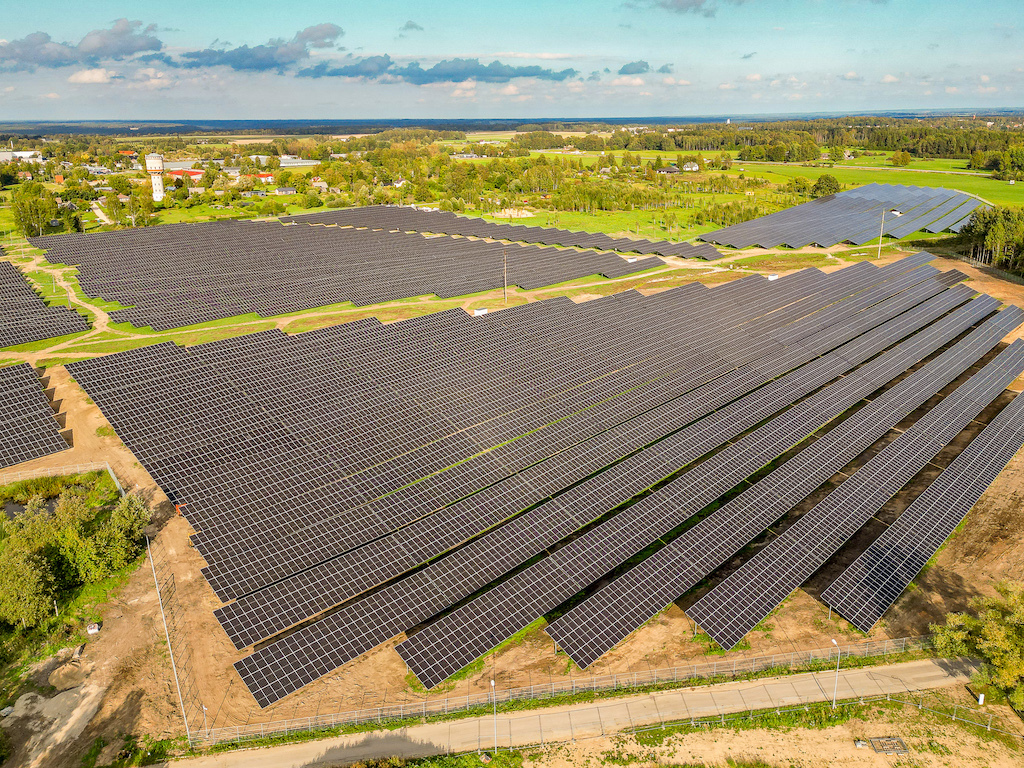
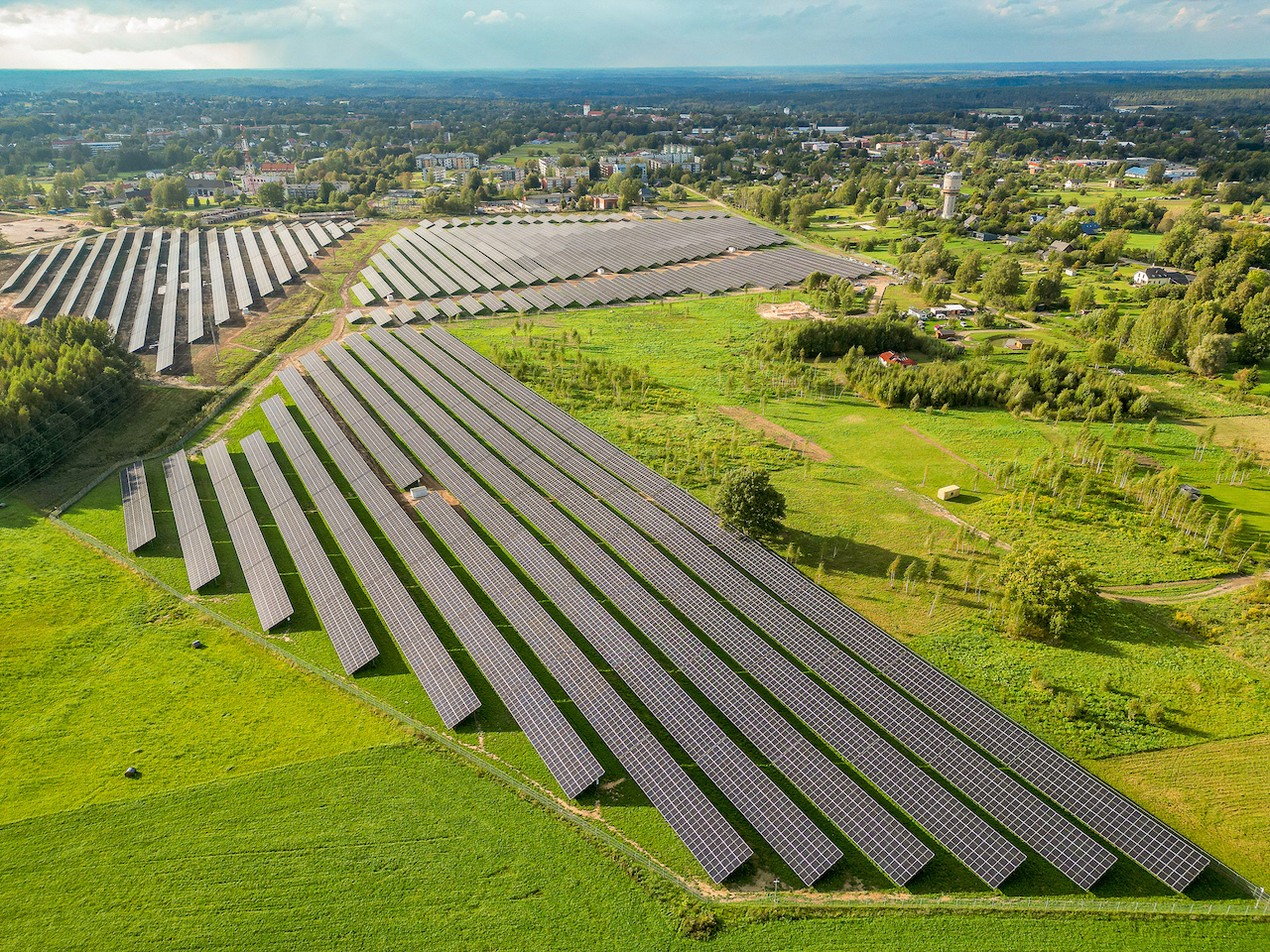
By attracting capital from more than 80 Latvian private and institutional investors, the Merito Sustainable Energy Fund I, managed by Merito Partners, in cooperation with renewable energy project developer Saules Energy, implemented the construction of eight large-scale solar power plants (SPP) between 2023 and 2024 in Zilupe, Brenguļi, Inčukalns, Carnikava, Kalkūne, Koknese, Cēsis, and Valmiera. The combined capacity of our SPP’s is 71.5 MW.

The Merito Partners solar power plants have been developed with connections to the distribution grid, enabling electricity generation close to end users in the regions — both local residents and businesses. Together, the eight SPPs currently provide electricity for approximately 35,000 Latvian households, strengthening Latvia’s energy independence and supporting the achievement of sustainability goals.

The solar power plant modernization project includes the installation of BESS across all plants, with a total storage capacity of 120 MWh. This solution enables solar-generated energy to be used during nighttime hours and improves operational predictability under varying weather conditions. In addition, the technical capabilities of BESS provide significant support to the stability of Latvia’s power system.

The modernization project will be implemented during the course of this year, with total costs amounting to EUR 25 million. For the first phase of implementation, Signet Bank has issued a loan of EUR 13 million.

Mikus Janvars, Co-Founder and Managing Partner of Merito Partners: “The launch of the BESS project marks an important development step in our green infrastructure initiative. We are grateful for the confidence shown by our investors and Latvia’s leading investment bank. The financing will enable Merito’s solar power plants to be equipped with BESS, gradually making their operations less dependent on weather conditions and electricity market volatility. This will significantly increase the resilience of the solar energy portfolio’s revenue streams and its long-term value.”

The BESS-equipped solar power plant platform is expected to become operational by the end of 2026.

Roberts Idelsons, Chairman of the Management Board of Signet Bank, commented: “The development of energy infrastructure is essential for the sustainable growth and independence of Latvia’s economy. We are pleased to support local entrepreneurs in implementing projects of this scale — strengthening the country’s energy supply system while promoting the transition to a more climate-neutral economy. This year, Signet Bank plans to increase its loan portfolio by nearly  EUR 200 million, and this financing transaction represents an important step toward achieving this goal.”

Merito Partners announces EUR 14 million investment in residential development at Skolas Street 21

Merito Real Estate Special Fund IV has acquired a 9,000-square-meter property at Skolas Street 21 in the historic center of Riga for EUR 5.9 million. The total investment in the project is expected to surpass EUR 14 million. The site will be transformed it into a residential building featuring around 250 compact apartments.

The property located at Skolas Street 21 was constructed in 1987 in alignment with the requirements of the Design Institute, showcasing classic socialist-era architecture with a sturdy reinforced concrete frame, high ceilings, and five modern elevators, positioning it well for adaptation to current standards. The building covers over 9,000 square meters in total, and after renovations, it will offer around 250 studio and one-bedroom apartments, each sized between 17 and 35 square meters.

The acquisition of the property was co-financed by AS Signet Bank with a contribution of EUR 3.85 million. Upon completion of the reconstruction, total investments in the project are expected to surpass EUR 14 million.

Merito Partners Specialized Real Estate Fund IV is focusing on investing Latvian capital into the development of high-potential properties, thereby supporting increased access to affordable and modern housing for permanent residents and long-term visitors in Riga. The property at Skolas Street 21, situated near Old St. Gertrude’s Church and the Quiet Centre, presents a particularly appealing location for students and foreign professionals residing in Latvia who value a vibrant urban setting with historical significance. Our goal is to renovate and enhance this building with consideration for the needs of Riga residents while adhering to sustainability principles,” states Igors Terehovs, Partner at Merito Real Estate Management.

Merito Partners intends to maximize the utility of the building by incorporating commercial spaces, co-working and recreational areas, storage solutions, and dedicated bicycle parking spaces. The renovation is expected to result in an environmental impact that is roughly 50% lower than that of building a comparable new facility. Additionally, the reconstruction will enhance energy efficiency and streamline both maintenance and operational costs.

Merito Real Estate Special Fund IV has successfully completed fundraising by securing capital from 23 private Latvian investors.

Since 2023, Merito Partners has launched over ten Latvian-capital investment funds, totalling EUR 16 million, to carry out its targeted real estate strategy. The funds’ portfolio includes properties such as buildings in Riga’s Old Town at Kalēju Street 18/20 and Pasta Street 6, the former Straume industrial complex at Ulmaņa Gatve 2, a historic residential property at Brīvības Street 138, and the previous scientific complex at Krīvu Street 11, among other projects. In partnership with others, Merito is also developing the Skanstehof residential project at Hospitāļu Street 49. Plans already call for more than 600 new apartments, and the total value of the asset portfolio has reached EUR 80 million. Additionally, Merito is actively involved in detailed analysis, acquisitions, and phased expansions for several more properties.

2025 Year-End Newsletter

Update No.17
December 2025

Greetings from Merito Partners

As we approach the end of 2025, this is the perfect moment to pause, reflect, and appreciate the journey Merito Partners have taken. Each year brings its own momentum, but 2025 stands out as a period where many of our long-term efforts translated into tangible progress. Before we turn the page to a New Year, we are pleased to share the milestones achieved, celebrate the wins, and highlight the opportunities shaping the road ahead of us.

Reflecting on 2025: Main Milestones

Our investor community continued to grow meaningfully throughout 2025, now exceeding 220 unique investors who share our mission of making private equity more accessible and transparent. This year, we also proudly surpassed €150 million in assets under management and administration, reaffirming the trust our investors place in us and the relevance of the opportunities we develop across sectors.

Strengthening Our Team

To support our expanding investment portfolio and ambitious pipeline, the Merito Partners team has grown to over 20 professionals , with additional recruitment ongoing. This expansion strengthens our capabilities across deal execution, project management, fundraising, portfolio oversight, legal, and compliance – ensuring we are well prepared to meet the needs of our growing investor base and the increasing scale of our investment initiatives.

Key Milestones Across Our Portfolio

Merito Partners now manages 10 investment funds and oversees more than 20 active investment projects across energy, real estate, growth equity, buyout and evergreen strategies. Key achievements this year include:

  • Sustainable Energy Fund — we are progressing in obtaining financing to initiate the upgrade of our 71.5 MW solar PV portfolio with the integration of a 120 MWh battery energy storage system (BESS). The upgraded platform is targeting commercial operations in Q3 2026, significantly enhancing revenue resilience and long-term value.
  • Merito Self Storage Fund — BoxStorage has become the No. 1 self-storage platform in the Baltics, now operating 14,500 m² of leasable space across eight locations. Fundraising has been successfully completed with €17.8 million raised from 60 investors. The next phase focuses on operational excellence, utilisation growth, and continued market consolidation.
  • Real Estate Special Situation Funds — All projects launched in previous years have outperformed expectations, already returning 40% of committed equity to investors. These results underline the potential to exceed 20%+ net annual returns over the full investment cycle.
  • New Real Estate Projects in 2025 — This year, we executed four new special situation real estate deals, aligned with our dual strategy of Partnering with developers and Repositioning undervalued assets. These initiatives leverage Riga’s position as the most affordable EU capital for housing and growing demand for serviced living formats. More on this approach is available in our July newsletter.
  • Evergreen Investments — In 2025, we deepened our work with evergreen structures — long-term investments designed for compounded value creation and dividend yield. Among the first few cases, we also launched Lignord Group (wood processing sector consolidator) to advance succession-driven opportunities in the key Baltic industry.
  • Growth Equity Portfolio Highlights — Our growth equity portfolio continues to demonstrate strong performance. MyCabin doubled its scale in 2025, while our Laundromat network expanded to nearly 100 locations across 10 countries. These milestones provide a robust platform for continued growth, internationalisation, and future value creation.

What’s Next: Building on Momentum

As we reflect on the achievements of 2025, we also look ahead with confidence and determination. Merito’s investment strategy remains anchored in identifying niche opportunities, building scalable platforms, and offering investors access to high-quality private market deals.

The upcoming months will give investors the chance to evaluate three different projects.

🐄 Project Truffle — Strategic Acquisition in Baltic Agribusiness

Project Truffle marks Merito’s entry into one of the most resilient, asset-backed sectors in the Baltics – agribusiness. We are currently in the final stages of acquiring a vertically integrated livestock farming group from a US investment fund, opening the door to long-term, income-focused value creation.

The business combines a high-efficiency operational core with a substantial portfolio of owned agricultural land, while maintaining full control over its value chain, including in-house feed production. An experienced management team with decades of sector expertise will remain at the helm, reinvesting alongside Merito and ensuring strong alignment of interests.

Structured as an evergreen investment and supported by debt financing from a leading Baltic investment bank, Project Truffle focuses on strong cash yield generation backed by stable cash flows and more than 20 years of operating history. The investment is anchored in real assets, conservative structuring, and a clearly defined long-term value creation strategy.

🚑 MeDi Group Platform for Healthcare Services Consolidation

MeDi Group represents Merito’s expansion into one of the most resilient and socially essential sectors in the Baltics – healthcare. Driven by long-term structural trends such as an aging population, historically low healthcare spending, and steady market growth, the platform is being developed to build a scalable, professionally managed outpatient care group across the region.

In partnership with healthcare industry expert Dins Šmits, MeDi Group is designed as a long-term consolidation platform, bringing together high-quality clinics across diagnostics, surgery, rehabilitation, and wellness. The first foundations are already in place: the initial investment round is nearing completion, securing both the central management team and the first clinic.

MeDi Group aims to combine strong governance, medical excellence, and operational discipline – creating a business that delivers resilient cash flows, scalable growth, and a meaningful contribution to the sustainability of the Baltic healthcare ecosystem.

🏗️ Riga Real Estate: Special Situations Projects

At Merito, we see Riga not only as a capital rich in history, but as one of Europe’s most overlooked real estate investment markets – a city where disciplined, hands-on execution can still unlock exceptional value.

We are currently preparing at least two new real estate investments under our proven renovate–convert–realise model. These are special situations in prime locations: underappreciated or underutilised assets that can be repositioned to meet today’s demand for quality urban living and short-term accommodation.

Each project is structured as a focused, single-asset strategy, combining active asset management with institutional oversight. Beyond financial returns, these projects contribute to the thoughtful revitalisation of Riga’s urban fabric – delivering value with discipline, creativity, and aligned capital.

If the abovementioned projects aligns with your long-term investment interests, and you’d like to explore it further, please let us know.👋 We’ll be happy to provide more details and answer any questions.

With EUR 5 million investment, a new Box Storage facility will be developed on Kalnciema Street

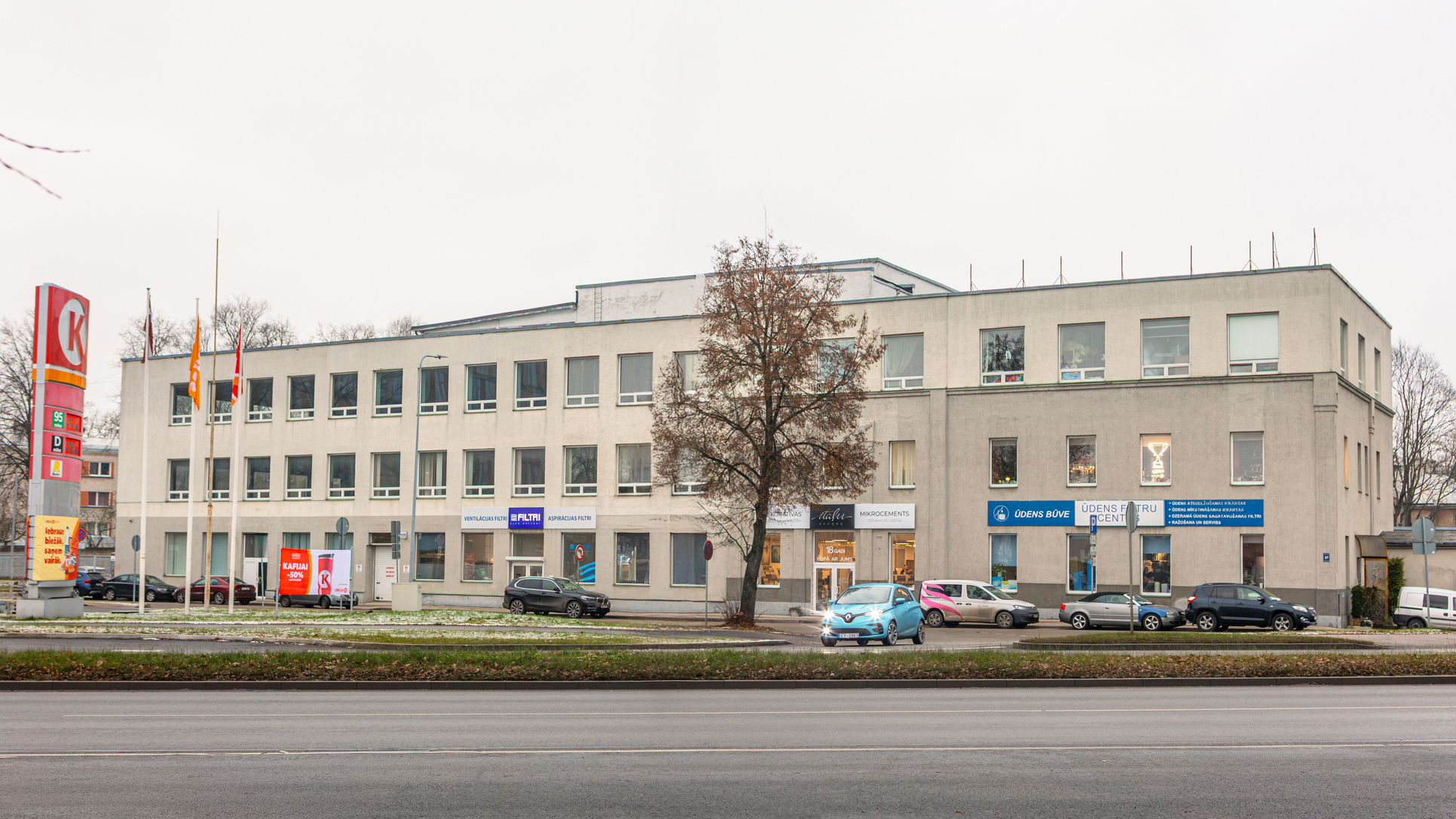
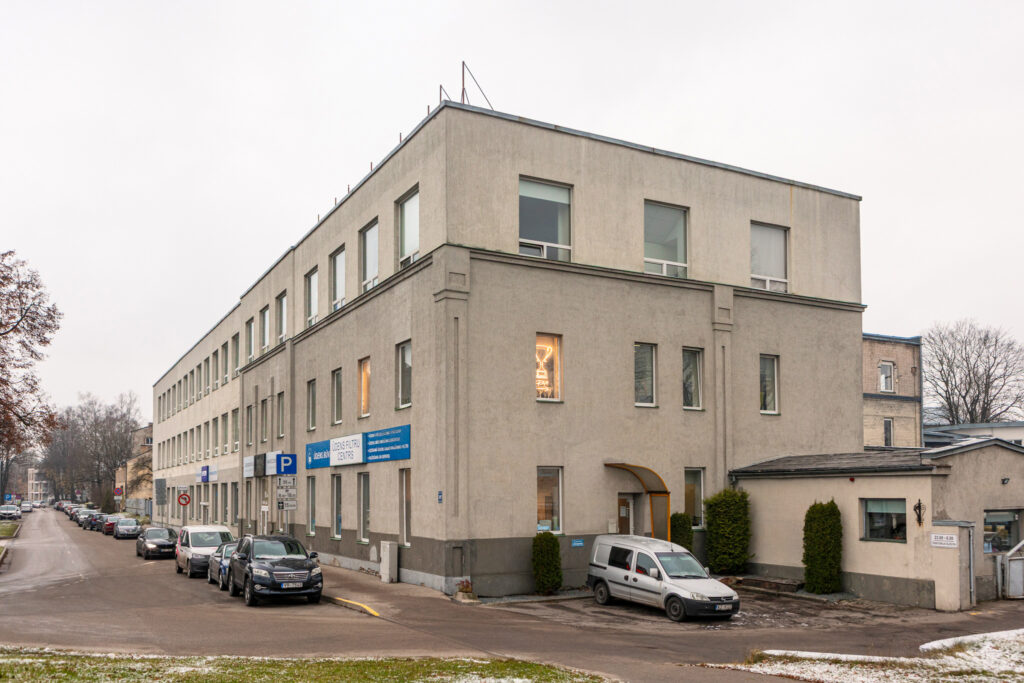
Box Storage – the leading self-storage operator in the Baltics, developed by Merito Partners – has acquired a property at Kalnciema Street 87 in Riga. The building will house at least 1,000 individual storage units. Total investment in the Kalnciema Street Box Storage project will exceed EUR 5 million.

The property will be developed in line with Box Storage standards. During the first construction phase, at least 3,000 square meters of leasable space will be built. It is planned, that upon completion, the facility will offer more than 5,000 square meters of leasable space and over 1,000 individual storage units of various sizes.

In fall 2023, Merito Partners launched the Merito Self Storage Fund to develop the largest self-storage network in the Baltic region within five years. The project aims to create at least 10 storage complexes, totaling 30,000 square meters of leasable area and 6,500 individual storage units. The fund already owns the largest self-storage operator in the Baltics — Box Storage — which currently operates eight facilities: five in Latvia, including a storage complex in the former Go Planet entertainment center in Riga, one property in Tallinn, and two in Lithuania — in Vilnius and Kaunas.

Mārtiņš Baumanis, Partner at Merito Partners, notes:
“The acquisition of the property at Kalnciema Street 87 is a strategic step in expanding the Box Storage network, given its location in Pārdaugava, close to key transport routes, the airport, and residential neighborhoods. Demand for self-storage solutions from both private individuals and businesses continues to grow steadily in Riga and other major Baltic cities, consistently outpacing supply. The fundraising period for the Merito Self Storage Fund has concluded, with EUR 18 million invested by 60 private and institutional investors, demonstrating the strong potential of this specialized real estate investment segment.”

In developing the Box Storage network, Merito Partners focuses on acquiring properties in convenient and easily accessible locations within major Baltic cities. All Box Storage facilities feature energy-efficient construction and advanced security solutions. Customers benefit from user-friendly smart technologies, including a mobile app that provides instant access to storage units with a single tap, remote contract signing via the website, and automatic payment processing. Storage units are accessible to clients 24/7. For further details, please visit the Box Storage website.